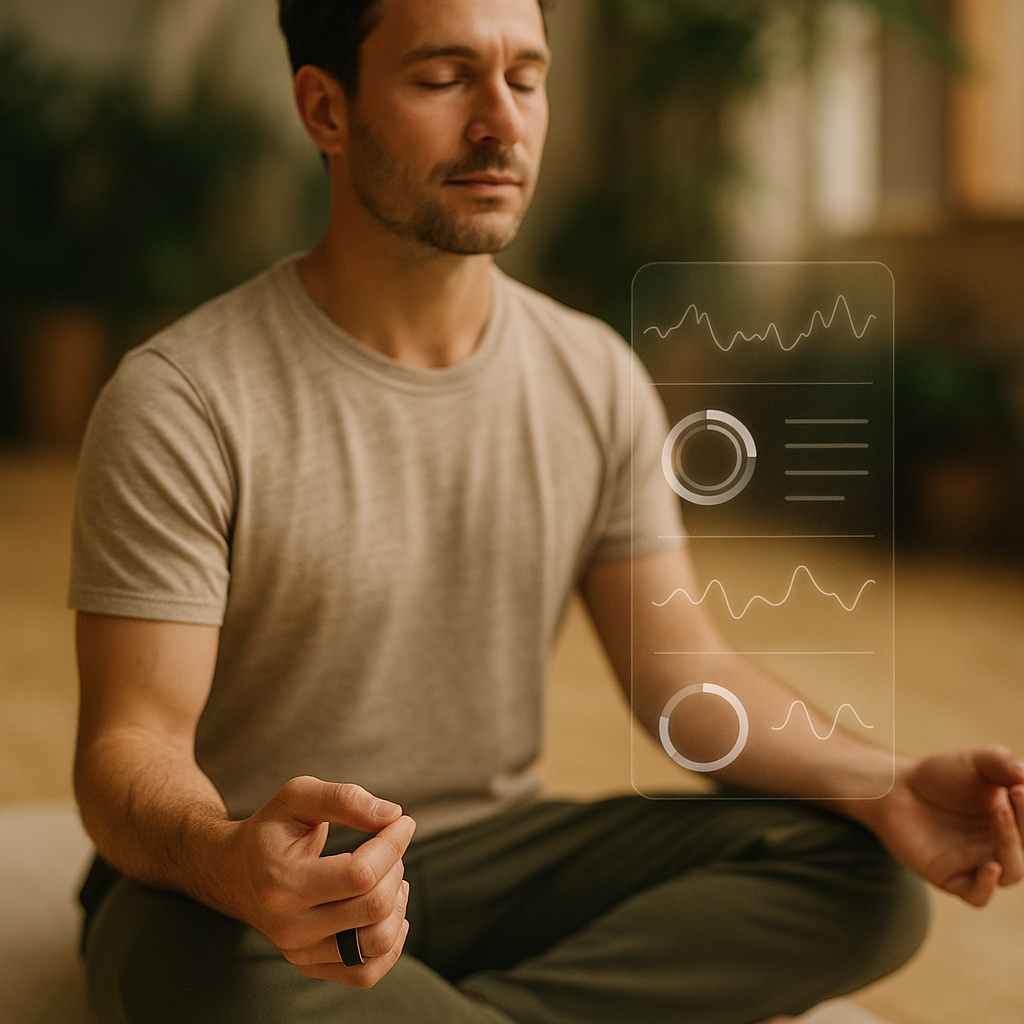
The contemporary health landscape of 2026 reflects a profound evolution from a reactive, disease-centric model to a proactive framework emphasizing lifelong wellness and preventive care. This paradigm shift is significantly enabled by advancements in personal biometric technology. A medical-grade smart ring, functioning as a non-intrusive digital health tool, stands at the vanguard of this movement, offering continuous, high-fidelity physiological data. By integrating sophisticated fingertip sensing technologies with intelligent algorithms, such a device translates complex biological signals into personalized, actionable insights for holistic health. It addresses five critical global health concerns: the ambiguous state of sub-health, the premature onset of chronic conditions, pervasive stress, widespread sleep disruption, and systemic energy imbalance. This ecosystem of continuous monitoring empowers individuals to comprehend the intricate interplay between their physiological state and mental well-being, fostering evidence-based lifestyle interventions that cultivate a durable mental-physical balance and redefine the management of full-life-cycle health.
For centuries, the prevailing conception of health has been largely defined by its absence: the absence of disease, the absence of pain, the absence of discernible pathology. This reactive framework, while responsible for monumental achievements in treating acute illness and injury, proves insufficient for navigating the complexities of modern well-being. We now confront a world where many individuals exist in a nebulous "gray zone"—not clinically sick, yet far from flourishing. This state, often called sub-health, is characterized by persistent fatigue, cognitive fog, poor sleep, and a general sense of diminished vitality. The World Health Organization's foundational definition of health as "a state of complete physical, mental and social well-being and not merely the absence of disease or infirmity" has never been more relevant (World Health Organization, n.d.). Holistic health is the practical application of this principle; it is an approach that honors the profound interconnectedness of the mind, body, and spirit, viewing the human being not as a collection of separate parts but as an integrated, dynamic whole.
This perspective challenges us to move beyond symptom management and toward cultivating the foundational conditions for vitality. It asks us to consider how our lifestyle, environment, emotional state, and daily rhythms contribute to the symphony—or dissonance—of our physiological functioning. Imagine your health not as a static report card from a yearly physical, but as a living, breathing ecosystem. In this ecosystem, sleep quality directly influences metabolic function, psychological stress impacts cardiovascular health, and physical activity shapes neurological resilience. A holistic health approach is the work of a skilled gardener, tending to the soil, ensuring adequate sunlight, and understanding that the health of one plant affects the entire garden.
The challenge, historically, has been the lack of tools to adequately perceive this ecosystem in real-time. We have relied on subjective feeling and infrequent, static medical tests. Yet, the technological landscape of 2026 offers a transformative capability: the power of continuous, personalized data. A device like the Mayissi smart ring acts as a translator, converting the body's subtle, ceaseless physiological dialogue into a language we can understand and act upon. It provides the objective data needed to illuminate the connections between our choices and our well-being, making the principles of holistic health not just an ideal, but a practical, data-driven reality.
| Feature | Traditional Healthcare Model | Holistic Health Model |
|---|---|---|
| Primary Focus | Disease treatment and symptom management | Wellness promotion and root cause analysis |
| Approach | Reactive, compartmentalized (specialist-driven) | Proactive, integrated (whole-person focus) |
| Patient Role | Passive recipient of care | Active participant in well-being |
| Key Tools | Diagnostic tests for pathology, pharmaceuticals | Lifestyle interventions, nutrition, continuous monitoring |
| Time Orientation | Episodic (care during sickness) | Continuous (lifelong health management) |
| Core Goal | Absence of disease | Optimal vitality and flourishing |
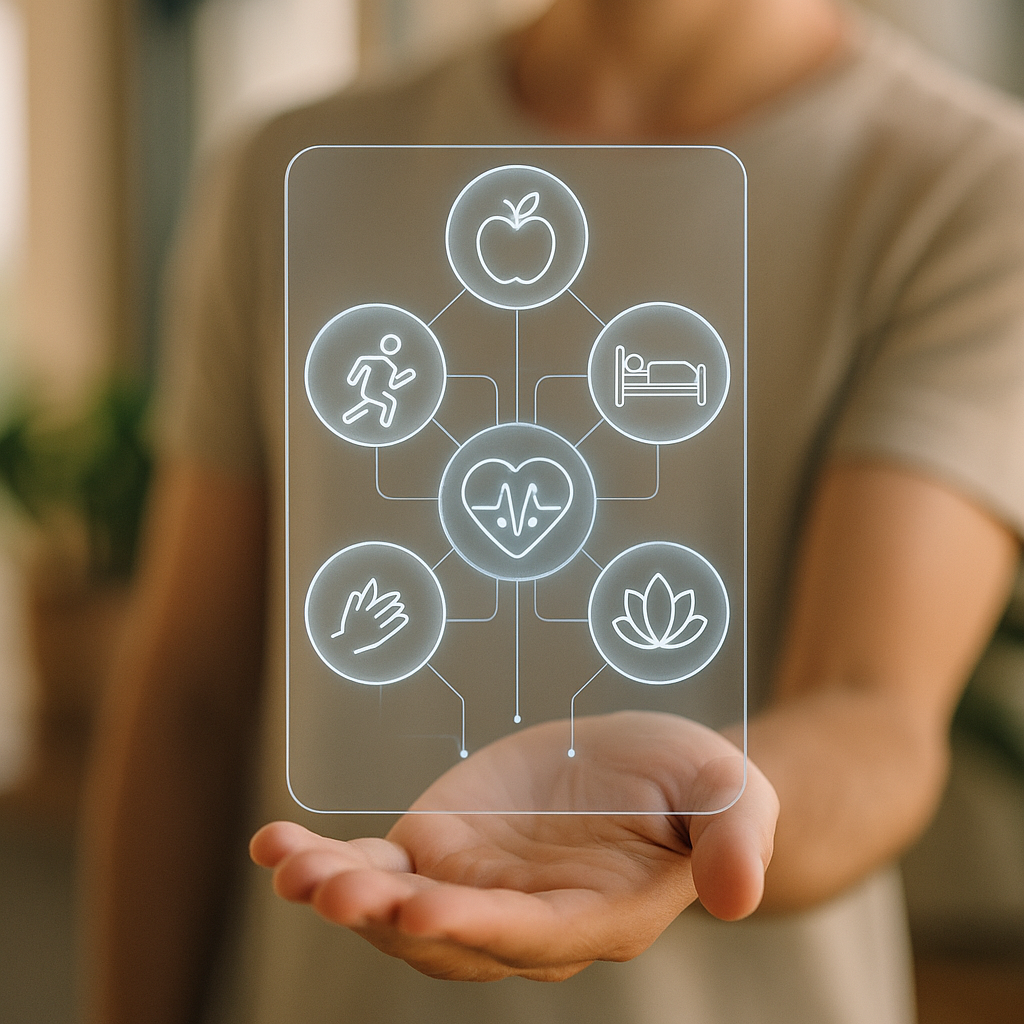
To translate the grand vision of holistic health into a lived reality, we must have a functional framework. A data-driven approach, powered by continuous monitoring, allows us to structure our efforts around five interconnected pillars. Each pillar represents a fundamental domain of human functioning that contributes to our overall state of well-being. They are not separate silos but interwoven threads in the fabric of our vitality. The true power of this model emerges when we use objective data to see how a change in one pillar ripples through all the others.
A smart ring does not create health, but it serves as an indispensable mirror, reflecting the state of each pillar with objective, moment-to-moment clarity. It empowers us to move from guessing to knowing, transforming our pursuit of holistic health from a vague aspiration into a precise, personalized science.
| Smart Ring Metric | Primary Pillar | Secondary Pillar(s) | Interpretation |
|---|---|---|---|
| Activity Score | Physical Foundation | Energetic Equilibrium | Measures daily movement, inactivity, and progress toward goals. |
| Sleep Stages & Score | Biochemical Engine | Neurological, Emotional | Quantifies restorative deep and REM sleep, essential for repair and memory. |
| Heart Rate Variability (HRV) | Neurological Command Center | Emotional, Energetic | Reflects autonomic nervous system balance and resilience to stress. |
| Body Temperature Deviation | Biochemical Engine | Energetic Equilibrium | Reveals circadian rhythm patterns and can signal impending illness or hormonal shifts. |
| Resting Heart Rate (RHR) | Neurological Command Center | Biochemical, Physical | Indicates cardiovascular fitness and recovery status. |
| Readiness Score | Energetic Equilibrium | All Pillars | A composite score indicating your capacity to perform on a given day. |
The first pillar of holistic health is the one with which we are most familiar, yet often understand most superficially: our physical body. For decades, the conversation around physical health has been dominated by a narrow focus on "exercise"—a designated block of time set aside for vigorous, often repetitive, activity. While formal exercise is valuable, a true holistic approach requires a more expansive view of our physical existence. It is about cultivating a state of dynamic embodiment, recognizing that our health is shaped not just by 30 minutes on a treadmill, but by the 23 and a half other hours of the day.
The primary foe of our physical foundation in the 21st century is not a lack of gym memberships, but the pervasive nature of a sedentary lifestyle. Our bodies, honed by millennia of evolution for near-constant motion, are now largely confined to chairs, couches, and car seats. This chronic inactivity leads to a cascade of negative consequences, from metabolic dysfunction and poor posture to reduced circulation and stiffened joints. The goal of this pillar is to re-integrate movement into the very fabric of our lives.
A smart ring is a powerful ally in this endeavor because it shifts the focus from sporadic, intense workouts to a continuous stream of activity data. It helps us see the bigger picture. The device's accelerometers don't just track a 5k run; they track every step, every stand-up, every stretch. This creates a more honest and holistic picture of our physical life. The "Activity Score" or "Steps" metric becomes a constant, gentle prompt to combat stillness. It encourages us to find movement in the small moments: taking the stairs, walking during a phone call, or simply standing up from our desk every hour.
This data reframes the goal. Instead of a binary "I exercised today" or "I didn't," it becomes a spectrum. You might see that even on a day without a formal workout, you achieved a high activity score by running errands, gardening, or playing with your children. This validates and encourages a broader range of life-affirming movements, which is the essence of a holistic physical practice. It helps us build a base of low-intensity movement throughout the day, which is arguably more important for long-term metabolic health than isolated, high-intensity sessions.
One of the most powerful features of modern wearables is their ability to track not just movement, but the lack of it. An "inactivity alert" is more than a simple reminder; it is a physiological intervention. When we sit for prolonged periods, the large muscles of the lower body become dormant, circulation slows, and the cellular signals that regulate blood sugar begin to falter. By prompting us to move, the ring helps to break these negative patterns before they become entrenched.
Think of your circulatory system as a network of rivers and streams. When you are active, the water flows freely, delivering oxygen and nutrients and washing away waste products. When you are sedentary, the streams become stagnant, allowing metabolic byproducts to accumulate. The ring's data allows you to visualize this flow, encouraging you to maintain a dynamic physical state throughout the day. It helps you answer questions like: How many hours a day am I truly sedentary? Does a short walk after lunch improve my energy levels in the afternoon? The data provides the feedback loop necessary to connect action with outcome, reinforcing habits that support your physical foundation.
If the physical body is the chassis of our being, the biochemical engine is the complex machinery that powers it. This pillar governs the vast network of chemical reactions responsible for energy production, cellular repair, detoxification, and hormonal regulation. It is the silent, tireless work that happens beneath the level of conscious awareness, yet its efficiency determines our vitality, our mood, and our long-term health trajectory. The single most influential lever we have over this engine is sleep.
For too long, sleep has been treated as a luxury or a passive state of inactivity—a necessary inconvenience to be minimized in the pursuit of productivity. A holistic health perspective, informed by modern science, recognizes sleep for what it truly is: an active, highly organized, and indispensable biological process. During sleep, the brain consolidates memories, clears out metabolic waste, and recalibrates its neurochemical balance. The body repairs muscle tissue, regulates hormones like insulin and cortisol, and strengthens the immune system. Neglecting sleep is akin to running a high-performance engine without ever changing the oil or performing maintenance. Eventually, it breaks down.
The advent of wearable technology has democratized sleep science, moving it from specialized labs into our own bedrooms. A smart ring sleep tracker provides an unprecedented window into the nightly architecture of our rest. It uses a combination of photoplethysmography (PPG) to measure heart rate and its variability, accelerometry to detect movement, and temperature sensors to track physiological changes, allowing it to estimate our time in different sleep stages.
By tracking these stages night after night, the ring's data moves us beyond the simple question of "How many hours did I sleep?" to the more nuanced and important question of "How well did I recover?" You might find that eight hours in bed only yielded 30 minutes of deep sleep, explaining why you still feel exhausted. This data becomes a powerful diagnostic tool, allowing you to experiment with lifestyle changes—like avoiding late meals, creating a cooler sleep environment, or practicing evening meditation—and see their direct impact on your sleep quality.
Our biochemical engine is designed to operate on a 24-hour cycle, known as the circadian rhythm. This internal clock, orchestrated by a master clock in the brain and synchronized primarily by light exposure, dictates the ebb and flow of nearly every physiological process, including body temperature, hormone release, and metabolic rate. A smart ring's continuous body temperature sensor provides a direct window into this rhythm. A healthy circadian rhythm is characterized by a predictable temperature pattern: a slight dip in the evening to facilitate sleep, a low point in the early morning, and a gradual rise throughout the day.
When our lifestyle is out of sync with this natural rhythm—a condition known as social jetlag, often caused by inconsistent sleep schedules, late-night screen time, or shift work—our temperature curve can become flattened or erratic. This desynchronization is a major driver of metabolic dysfunction. It disrupts the timing of insulin release, promotes inflammation, and can contribute to weight gain and an increased risk of chronic diseases (McEwen, 2017).
The data from your ring allows you to see your own circadian pattern. You can identify your personal temperature nadir (the lowest point) and work to align your sleep and wake times with it. You can observe how a late-night meal or a bright screen before bed disrupts your temperature drop, providing concrete evidence of its negative impact. This empowers you to make choices that support, rather than fight, your body's innate biological clock, forming a cornerstone of a holistic approach to metabolic health.
The third pillar of holistic health is the nervous system, the body's intricate command and control network. It is the interface through which we perceive, process, and respond to the world. A key aspect of neurological health is the function of the Autonomic Nervous System (ANS), which operates largely unconsciously to regulate vital functions like heart rate, digestion, and respiration. The ANS has two main branches that act like a physiological gas and brake pedal.
In a healthy individual, these two branches exist in a dynamic, flexible balance. We can activate the sympathetic response when needed and then smoothly transition back to a parasympathetic state once the challenge has passed. The problem in modern life is that chronic psychological stress—work deadlines, financial worries, constant digital notifications—keeps the sympathetic "gas pedal" persistently engaged. We live in a state of low-grade, perpetual fight-or-flight, which leads to a condition known as sympathetic dominance. This chronic activation is a major contributor to anxiety, burnout, high blood pressure, and a host of other modern ailments.
For years, the state of our ANS was largely invisible. Today, wearable sensors provide a direct, quantitative measure of its function: Heart Rate Variability (HRV). HRV is not the same as heart rate. It measures the millisecond-level variations in time between consecutive heartbeats. Contrary to what one might assume, a healthy heart is not a perfect metronome; it is highly variable. This variability is a sign of a healthy, adaptable nervous system.
A smart ring measures HRV continuously, especially during sleep when the data is cleanest and most reflective of your underlying physiological state. This transforms the abstract concept of "stress" into a concrete number you can track over time. It provides a daily report card from your nervous system.
Seeing a low HRV score on your ring's app can be a powerful wake-up call. It provides objective evidence that your body is struggling, even if you've been trying to "push through" the feeling of being stressed. This data is the first step toward conscious self-regulation. The next step is to use this feedback to make choices that activate the parasympathetic "brake."
The Mayissi ring, for instance, includes guided meditation and breathing exercises directly within its app. When you engage in these practices, you can see their real-time impact on your heart rate. Slow, diaphragmatic breathing is one of the most powerful techniques for directly stimulating the vagus nerve, the primary nerve of the parasympathetic system. As you practice, you are not just calming your mind; you are actively toning your nervous system.
Over time, you can correlate your HRV scores with your daily activities and experiences. You might notice that your HRV is higher after you spend time in nature, connect with a loved one, or get a good night's sleep. Conversely, you might see it plummet after a stressful meeting, a poor dietary choice, or a night of drinking alcohol. This feedback loop is the essence of data-driven holistic health. It allows you to identify your personal stressors and your personal recovery tools, empowering you to consciously steer your nervous system toward a state of balance and resilience.
The fourth pillar of holistic health recognizes a truth that ancient wisdom traditions have always understood, and that modern science is now unequivocally confirming: the mind and body are not separate entities. Our emotional landscape—our thoughts, feelings, moods, and beliefs—is inextricably linked with our physiological state. Every emotion has a biochemical signature; every thought can trigger a cascade of hormonal and neurological responses. To pursue holistic health is to acknowledge and work with this profound, bidirectional communication.
The concept of "psychoneuroimmunology" may sound complex, but its premise is simple: our psychological state (psycho) affects our nervous system (neuro), which in turn influences our immune system (immunology). When we experience feelings of joy, love, or contentment, our bodies produce neurochemicals like oxytocin and dopamine, which can lower stress hormones and reduce inflammation. Conversely, chronic anger, fear, or sadness can perpetuate the sympathetic stress response discussed in the previous pillar, leading to elevated cortisol, suppressed immune function, and a state of systemic inflammation that underlies many chronic diseases.
A holistic health perspective does not judge emotions as "good" or "bad." Instead, it seeks to understand them as valuable information. Emotions are signals, messengers from our inner world that tell us about our needs, our values, and our relationship with our environment. The goal is not to suppress or eliminate difficult emotions, but to cultivate the capacity to experience them with awareness, without letting them hijack our physiology.
How can a device that measures physical data help us navigate our emotional landscape? A smart ring acts as an objective observer of the body's response to our inner world. While it cannot read your thoughts, it can precisely measure the physiological downstream effects of your emotional state.
Consider this scenario: You have a difficult conversation with a colleague. Subjectively, you might brush it off and tell yourself "it's fine." But your smart ring tells a different story. It logs a significant dip in your HRV, a spike in your resting heart rate that persists for hours, and that night, a notable decrease in your deep sleep. The data provides undeniable evidence that the event had a real, measurable physiological cost. It validates the feeling you might have been trying to suppress and highlights a pattern.
By paying attention to these correlations, you can begin to map your own emotional-physiological landscape.
This process cultivates a form of embodied self-awareness. It moves emotional intelligence from an abstract concept to a practical skill, grounded in the data of your own body. It helps you build a more compassionate and understanding relationship with yourself, recognizing that your feelings have a physical reality that deserves to be acknowledged and cared for.
The final pillar of holistic health is the synthesis of all the others. It is the concept of energetic equilibrium—the dynamic balance between the total load placed upon our system and our capacity to recover and adapt. In the language of wearable technology, this is often represented by a "Readiness" or "Energy" score. This single, intuitive number attempts to answer a very fundamental question: "How prepared am I to handle the demands of today?"
This concept is rooted in the physiological principle of allostasis and allostatic load, developed by Dr. Bruce McEwen (2017). Allostasis is the process of achieving stability through change—how our body constantly adjusts to meet challenges. The "load" is the cumulative cost of this adaptation. When the demands placed upon us (stressors) are acute and followed by adequate recovery, we adapt and become stronger. This is the principle behind exercise. However, when the load is chronic and recovery is insufficient, we begin to accumulate allostatic "wear and tear." This is the physiological basis of burnout, sub-health, and eventually, chronic disease.
The stressors that contribute to our allostatic load are multifaceted. They include:
Our system does not differentiate between these sources of stress; it all contributes to the total load. A holistic health approach requires us to manage this total load, not just one aspect of it.
A Readiness score, as calculated by a device like the Mayissi smart ring, is a remarkable feat of data synthesis. It is an algorithm that takes inputs from all the other pillars and integrates them into a single, actionable metric. The score is typically derived from:
The resulting score, usually presented on a scale of 0-100, provides a simple, color-coded guide for your day.
This data-driven approach to energy management is transformative. It replaces the "no pain, no gain" mentality with a more intelligent, sustainable model of "train, don't drain." It teaches you to listen to your body's signals and respect its need for recovery. By honoring the wisdom of your daily Readiness score, you learn to surf the waves of your own energy, working with your body's natural rhythms to build long-term resilience and vitality.
1. Is a smart ring a medical device?
While advanced smart rings like the Mayissi ring use medical-grade sensors and provide highly accurate health data, they are generally classified as wellness devices, not medical devices. They are designed for proactive health monitoring, pattern recognition, and lifestyle optimization. They are not intended to diagnose, treat, cure, or prevent any disease. The data should be used to facilitate more informed conversations with your healthcare provider.
2. How is a smart ring different from a smartwatch?
The primary differences lie in form factor, focus, and user experience. A smart ring is designed for discreet, 24/7 wear, making it more comfortable for sleep tracking. Its focus is purely on passive health monitoring without the distractions of screens, notifications, and apps that a smartwatch has. This minimalist approach encourages a more subconscious and continuous form of data collection, which is ideal for a holistic health perspective.
3. How accurate is the data from a smart ring?
Leading smart rings have become remarkably accurate. Studies have validated devices like the Oura Ring against the clinical gold standard, polysomnography (PSG), for sleep staging, finding high levels of agreement, particularly for distinguishing sleep from wakefulness (de Zambotti et al., 2023). Metrics like heart rate and body temperature, measured from the finger, are often more stable and reliable than from the wrist. However, it's best to view the data as a tool for tracking trends and personal patterns rather than as a source of absolute, single-night diagnostic truth.
4. Can a smart ring really help with mental and emotional health?
A smart ring cannot measure emotions directly, but it provides a powerful window into the physiological effects of your mental state. By tracking metrics like Heart Rate Variability (HRV) and resting heart rate, you can see the objective, physical impact of stress, anxiety, or even joy. This data provides a feedback loop, allowing you to see how practices like meditation, breathing exercises, or time in nature tangibly improve your physiological balance, reinforcing positive habits for mental well-being.
5. Do I need to pay a subscription to use the Mayissi smart ring?
One of the significant advantages of the Mayissi smart ring is that it does not require a monthly subscription. A one-time purchase grants you lifetime access to all of the ring's features and the accompanying app's insights, including continuous health tracking, personalized recommendations, and future software updates. This makes it an accessible tool for long-term holistic health management.
6. How does tracking women's health work with a smart ring?
Smart rings can be particularly insightful for women's health by tracking subtle body temperature fluctuations. These changes, when monitored continuously, can help identify the different phases of the menstrual cycle. By correlating this data with other metrics like HRV, sleep patterns, and mood, users can gain a deeper understanding of how their cycle impacts their energy, recovery, and overall well-being, allowing for more personalized health and fitness planning.
The journey into data-driven holistic health is more than a new approach to fitness or wellness; it represents a fundamental shift in our relationship with ourselves. It is a move away from outsourcing our health to a paradigm of personal sovereignty, where we become the primary investigator, the curious scientist, and the compassionate caretaker of our own being. Tools like the Mayissi smart ring are not the destination, but the compass. They provide the objective language needed to finally understand the body's subtle whispers before they become painful screams.
By embracing the five pillars—physical, biochemical, neurological, emotional, and energetic—we begin to see ourselves not as a machine to be fixed, but as a garden to be tended. We learn that a good night's sleep is as potent as any medicine, that a moment of mindful breathing can reshape our nervous system, and that our vitality is a finite resource to be intelligently managed, not endlessly exploited. This path requires curiosity, patience, and a willingness to listen. In return, it offers the promise of not just a longer life, but a more vibrant, resilient, and deeply embodied one.
de Zambotti, M., Pesonen, A. K., & de la Chapelle, A. (2023). Validation of a multi-sensor consumer wearable sleep tracker in a large-scale, multi-night, and unsupervised home-based study. Sleep, 46(11), zsad210. https://doi.org/10.1093/sleep/zsad210
McEwen, B. S. (2017). Neurobiology of stress, resilience, and vulnerability. Neuron, 96(1), 23-47.
Shaffer, F., & Ginsberg, J. P. (2017). An overview of heart rate variability metrics and norms. Frontiers in Public Health, 5, 258. https://doi.org/10.3389/fpubh.2017.00258
The Longevity Store. (2026). The best sleep trackers of 2026: Rings, bands, and smart mattresses compared. https://thelongevitystore.com/en-gb/blogs/blog/the-best-sleep-trackers-of-2026-rings-bands-and-smart-mattresses-compared
World Health Organization. (n.d.). Constitution.