

This article examines the concept of deep sleep, moving beyond the colloquial term to explore its scientific nomenclature and profound physiological significance. It presents a detailed analysis of the various terminologies used by sleep researchers, such as slow-wave sleep (SWS), Stage N3 sleep, and delta sleep, clarifying the specific neurophysiological phenomena each term describes. The document elucidates the critical functions of this sleep stage, including its roles in physical restoration, memory consolidation, hormonal regulation, and immune system fortification. Furthermore, it addresses factors that diminish deep sleep, such as aging and lifestyle choices, and outlines the subsequent health consequences. By integrating insights from sleep science and technology, the text provides evidence-based strategies for enhancing the quality and quantity of deep sleep. It also considers the role of modern wearable devices in monitoring sleep architecture, offering a comprehensive guide for individuals seeking to understand and improve this vital aspect of their health in 2026.
To truly grasp the significance of what we call deep sleep, we must first understand that sleep is not a monolithic state of unconsciousness. It is not like flipping a switch off. Instead, imagine sleep as an intricate, multi-act play that unfolds in a predictable yet dynamic sequence throughout the night. Our brain does not simply power down; it transitions through a series of carefully orchestrated stages, each with a unique purpose and a distinct neurobiological signature. This nightly journey is a cornerstone of our physical and mental well-being, a complex process that scientists refer to as sleep architecture.
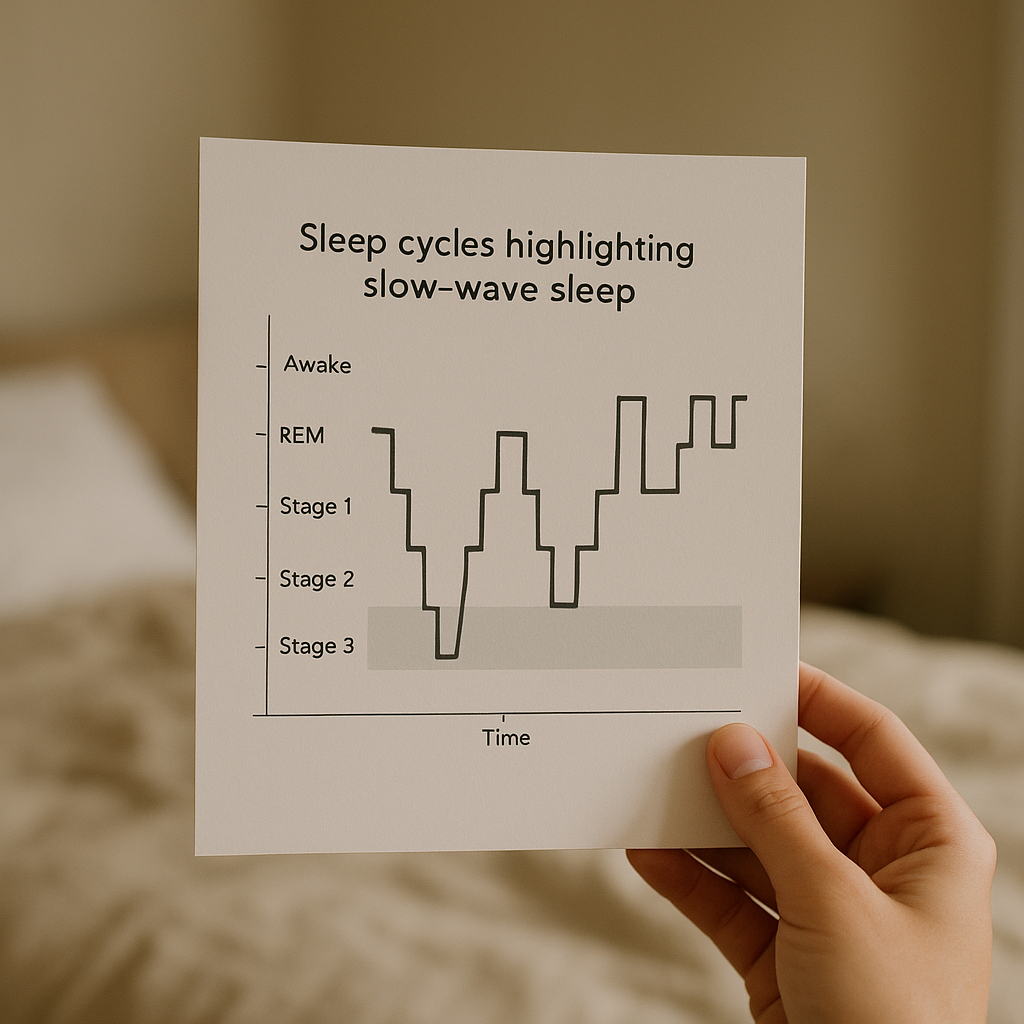
As we lie down and our minds begin to quiet, we embark on a cyclical voyage that typically lasts about 90 to 120 minutes and repeats four to six times over the course of a full night's rest (Patel et al., 2022). This cycle is broadly divided into two main types of sleep: Non-Rapid Eye Movement (NREM) sleep and Rapid Eye Movement (REM) sleep. Think of NREM as the descent into the quiet depths of restoration, while REM is a period of intense, almost paradoxical, brain activity.
NREM sleep is the dominant phase, accounting for roughly 75% of our total sleep time. It is itself subdivided into three distinct stages, each progressively deeper than the last. This progression is like descending a staircase into profound rest.
Stage N1 (Formerly Stage 1): This is the gateway to sleep, a fleeting transitional stage between wakefulness and slumber. Your breathing begins to slow, your muscles start to relax, and your brain waves, once rapid and alert, begin to decelerate. During these initial moments, which may last only one to seven minutes, you are easily awakened. You might experience the sensation of falling, followed by a sudden muscle jerk—a phenomenon known as a hypnic jerk. This stage is a light doze, the kind of sleep you might drift into while reading a book on the couch.
Stage N2 (Formerly Stage 2): Following the brief introduction of N1, you descend into Stage N2, which constitutes the largest portion of your nightly sleep, about 45-50% of the total duration. In this stage, your body settles into a more subdued state. Your heart rate and breathing slow down further, your body temperature drops, and your eye movements cease. The brain's electrical activity becomes characterized by unique patterns called sleep spindles and K-complexes. Researchers believe these bursts of activity play a role in consolidating memories and protecting sleep by filtering out external stimuli (Schönauer & Pöhlchen, 2018). You are more disengaged from your surroundings in N2, and it takes a more significant stimulus to awaken you.
Stage N3 (Formerly Stages 3 & 4): This is the destination we are seeking when we speak of "deep sleep." Stage N3 is the deepest, most restorative phase of NREM sleep. It is in this profound state of rest that the body's repair crew gets to work. Your breathing becomes slow and rhythmic, your blood pressure drops, and your muscles are fully relaxed. It is incredibly difficult to wake someone from Stage N3 sleep. If you are roused, you will likely feel groggy, disoriented, and mentally foggy for up to an hour—a state known as sleep inertia. This stage is most prominent during the first half of the night, with the duration of N3 periods decreasing in each subsequent sleep cycle.
After cycling through the NREM stages, you ascend back to a lighter stage and then pivot into a remarkably different state: REM sleep. This stage accounts for about 25% of sleep in adults. If NREM sleep is the body's time for physical repair, REM sleep is the mind's workshop.
During REM, your brain activity lights up, mirroring patterns seen during wakefulness. Your eyes dart rapidly back and forth behind your closed eyelids, giving the stage its name. Your breathing and heart rate can become irregular. Yet, while your mind is racing, your voluntary muscles are effectively paralyzed, a protective mechanism called atonia that prevents you from acting out your dreams. This is the stage where most of our vivid, narrative-driven dreams occur (Maquet, 2000). REM sleep is thought to be vital for emotional regulation, learning, and processing the day's experiences.
The interplay between NREM and REM sleep is a delicate dance. A typical night begins with a descent into deep N3 sleep, followed by a period of REM, completing the first cycle. As the night progresses, the composition of these cycles changes. The early cycles are dominated by deep N3 sleep, prioritizing physical restoration. In the later cycles, especially in the hours before waking, the duration of REM sleep extends, focusing more on mental and emotional processing. This elegant structure ensures that both body and mind receive the full spectrum of restoration they require. Understanding this architecture is the first step toward appreciating what another word for deep sleep truly means.
| Sleep Stage | Type of Sleep | Key Characteristics | Approximate Percentage of Adult Sleep |
|---|---|---|---|
| Stage N1 | NREM | Transition from wakefulness to sleep; light dozing; slow eye movements. | ~5% |
| Stage N2 | NREM | Body temperature drops; heart rate slows; sleep spindles and K-complexes appear. | ~50% |
| Stage N3 | NREM | Deepest sleep; slow-wave (delta) brain activity; physical restoration and growth. | ~10-20% |
| Stage 4 | REM | Active brain; rapid eye movements; vivid dreaming; muscle atonia. | ~25% |
When we casually say we want to get more "deep sleep," we are tapping into an intuitive understanding of its restorative power. However, in the world of sleep science, precision is paramount. Researchers and clinicians use a more specific and descriptive vocabulary to define this crucial phase of rest. Exploring these terms is not just an academic exercise; it illuminates different facets of what is happening in our brains and bodies during this profound state. Learning another word for deep sleep can empower you to better understand your own sleep data and health.
This is arguably the most common and technically precise another word for deep sleep. The term "slow-wave sleep" directly describes the defining characteristic of this stage as observed on an electroencephalogram (EEG). During this phase, the brain's electrical activity synchronizes, and the rapid, chaotic waves of wakefulness give way to high-amplitude, low-frequency oscillations known as delta waves. These waves are slow and powerful, appearing like long, rolling swells on an ocean compared to the choppy waves of a busy mind. When a sleep scientist sees these delta waves dominate the EEG reading, they know the individual has entered the profound state of slow-wave sleep (Léger et al., 2018). This term emphasizes the neurophysiological signature of the stage.
This is the official classification in the modern sleep scoring manual. Previously, the deepest stages of sleep were divided into Stage 3 and Stage 4. Stage 3 was characterized by 20-50% delta wave activity, while Stage 4 had over 50% delta waves. In 2007, the American Academy of Sleep Medicine (AASM) consolidated these two into a single stage, N3, to simplify and standardize sleep scoring (Patel et al., 2022). So, when you see "Stage N3" on a sleep report from a clinic or a consumer wearable, it is the direct, clinical equivalent of deep sleep. This term highlights its place within the overall architecture of the sleep cycle, as the third and final stage of non-REM sleep.
This is a closely related and often interchangeable term with slow-wave sleep. "Delta sleep" focuses specifically on the type of brain wave that defines the stage. Delta waves have a frequency of 0.5 to 4 Hertz, the slowest of all brain waves. The prevalence of these waves is a direct measure of sleep intensity and depth. The higher the percentage of delta waves, the deeper the sleep. Your brain produces the most delta waves during the first N3 stage of the night, and this production naturally declines with each subsequent sleep cycle and also as we age. Using the term "delta sleep" hones in on the specific brainwave pattern as the key marker of this restorative state.
While less of a technical, clinical term and more of a functional description, "restorative sleep" is frequently used in both scientific and popular literature to refer to slow-wave sleep. This name speaks directly to its purpose. It is during SWS that the body undertakes its most significant repair and maintenance tasks. The body releases growth hormone, which facilitates tissue repair and muscle growth, and the immune system is bolstered (Dijk, 2009). The brain also uses this time to clear out metabolic waste. Therefore, calling it restorative sleep accurately captures its vital role in helping us wake up feeling refreshed and physically recovered.
This is a more descriptive, technical phrase that you might encounter in detailed research papers. It is a direct description of the appearance of delta waves on an EEG. "High-amplitude" refers to the height or power of the brain waves, while "low-frequency" refers to their slowness. It is a more verbose way of saying "slow-wave sleep" or "delta sleep," but it provides a complete picture of the wave's characteristics for a technical audience. It underscores the powerful, synchronized firing of large populations of neurons that produces these distinctive brain waves.
This is a physiological description that highlights the metabolic processes occurring during slow-wave sleep. Metabolism can be broadly divided into two states: catabolic (breaking down) and anabolic (building up). During the day, our bodies are largely in a catabolic state, breaking down fuel for energy. During slow-wave sleep, the body switches to an anabolic, or building, state. The release of human growth hormone (HGH) peaks during this stage, promoting the growth and repair of cells, bones, and muscles. This is why SWS is so critical for athletes recovering from training and for children and adolescents during their developmental years. Using this term frames deep sleep within the context of whole-body metabolism and growth.
This term is sometimes used to differentiate the most essential parts of sleep from the more "optional" or lighter stages. The concept of core sleep posits that the body prioritizes SWS and a smaller amount of REM sleep above all else. When you are sleep-deprived, your body will try to "rebound" by entering SWS more quickly and spending a greater proportion of the night in it, sometimes at the expense of lighter sleep stages (Stepan et al., 2021). This demonstrates that slow-wave sleep is a non-negotiable, fundamental component of the sleep experience, the very "core" of what makes sleep essential for survival and health.
| Terminology | Primary Focus | Context of Use |
|---|---|---|
| Slow-Wave Sleep (SWS) | Brainwave characteristics (slow oscillations) | Scientific and clinical research; the most common technical term. |
| Stage N3 Sleep | Position in the sleep cycle architecture | Official clinical sleep scoring (AASM guidelines). |
| Delta Sleep | The specific type of brainwave (delta waves) | Neurophysiology and EEG analysis. |
| Restorative Sleep | The functional purpose of the stage | General health, wellness, and popular science communication. |
| High-Amplitude, Low-Frequency Sleep | Detailed physical description of brainwaves | Technical descriptions in academic papers. |
| The Anabolic Stage of Sleep | Metabolic and hormonal processes | Physiology, endocrinology, and sports science. |
| Core Sleep | Its fundamental, non-negotiable nature | Sleep deprivation and recovery studies. |
Slow-wave sleep is not merely a period of passive inactivity. It is a dynamic and essential state during which a host of critical activities unfold, fundamental to our physical health, cognitive abilities, and emotional balance. Think of it as the body's and brain's dedicated overnight maintenance and optimization session. The profound quiet on the surface belies a whirlwind of purposeful, restorative work happening beneath.
Perhaps the most intuitive function of slow-wave sleep is its role in physical recovery. During the day, our bodies endure wear and tear. Muscles are strained, cells are damaged, and energy stores are depleted. SWS is the prime time for the body's repair crew to get to work.
A key player in this process is human growth hormone (HGH). The pituitary gland dramatically increases its secretion of HGH during Stage N3 sleep (Léger et al., 2018). This hormone is not just for growth in children; in adults, it is vital for repairing tissues, building muscle mass, and breaking down fats. This is why athletes and individuals engaged in strenuous physical activity have a greater need for deep sleep; it is the foundation of their recovery and performance gains. Without adequate SWS, muscle soreness can linger, and the risk of injury may increase.
Furthermore, during this stage, blood flow is redirected from the brain to the muscles, delivering extra oxygen and nutrients to facilitate healing. The body enters its most profound state of relaxation, with reduced heart rate, blood pressure, and breathing rate, which lowers overall metabolic demand and allows resources to be channeled toward repair and regeneration.
While the body is busy with physical repairs, the brain is engaged in its own sophisticated form of maintenance. One of the most fascinating functions of slow-wave sleep is its role in memory consolidation. Our brains are constantly inundated with information during waking hours. Not all of this information is equally important or worth retaining. SWS acts as a master curator of our memories.
The prevailing theory, known as the synaptic homeostasis hypothesis, suggests that during the day, our learning experiences strengthen the connections (synapses) between neurons. This process, while essential for learning, is energetically costly and can lead to a saturation of our neural networks. During slow-wave sleep, the brain engages in a process of "synaptic down-scaling" (Zhang & Gruber, 2019). It intelligently prunes weaker, less important synaptic connections while preserving and strengthening the most important ones. This is not about forgetting; it is about making memory storage more efficient and creating space for new learning the next day.
This process involves a dialogue between the hippocampus, which initially encodes new memories, and the neocortex, where long-term memories are stored. The slow oscillations of SWS are thought to orchestrate the transfer of these newly learned memories from the fragile, short-term storage of the hippocampus to the more robust, long-term repository of the neocortex. This is how you can learn a new skill or study for an exam and wake up the next morning with the information feeling more ingrained and accessible.
Slow-wave sleep is a critical period for the regulation of the endocrine system. The hormonal environment of our bodies shifts dramatically when we enter this deep stage of rest. As mentioned, the release of HGH peaks, promoting physical growth and repair.
Simultaneously, the production of stress hormones, such as cortisol, is suppressed to its lowest point. This nightly dip in cortisol is essential for managing stress and reducing inflammation. A chronic lack of deep sleep can disrupt this pattern, leading to elevated cortisol levels, which are linked to a host of health problems, including weight gain, immune suppression, and cardiovascular issues.
SWS also plays a role in regulating hormones that control appetite, namely ghrelin (the "hunger hormone") and leptin (the "satiety hormone"). Insufficient deep sleep can lead to an increase in ghrelin and a decrease in leptin, creating a hormonal storm that increases appetite and cravings for high-calorie, carbohydrate-rich foods. This is one of the key mechanisms linking poor sleep to an increased risk of obesity and type 2 diabetes (Cirelli, 2022).
If you have ever felt the overwhelming urge to sleep when you are sick, you are experiencing your body's innate wisdom. There is a deep, bidirectional relationship between our sleep and our immune system, with slow-wave sleep playing a starring role.
During SWS, the body ramps up the production of certain immune cells, such as T-cells, and signaling proteins called cytokines. Some of these cytokines are pro-inflammatory and help the body fight off infections, while others are anti-inflammatory and help regulate the immune response. Slow-wave sleep provides the ideal environment for the immune system to mount an effective and balanced response to pathogens.
Moreover, SWS enhances the formation of immunological memory. Studies have shown that vaccination is more effective when followed by a good night's sleep, as SWS helps the body build a stronger and more lasting antibody response (Léger et al., 2018). Conversely, sleep deprivation weakens the immune system, making you more susceptible to common infections like the cold and flu. A chronic lack of deep sleep can contribute to a state of low-grade, chronic inflammation, which is a key driver of many chronic diseases, from heart disease to arthritis.
The consequences of missing out on this vital sleep stage are not just about feeling tired the next day. A chronic deficit in slow-wave sleep can have far-reaching and serious implications for nearly every aspect of our health. The effects can be categorized into short-term impairments that you might feel immediately and long-term risks that accumulate over time.
When you are awakened repeatedly or fail to get enough deep sleep, your body and brain feel the strain almost immediately.
Cognitive Impairment: The most noticeable effect is a decline in cognitive function. You might experience difficulty concentrating, reduced alertness, and a shorter attention span. Problem-solving becomes more difficult, and your creativity may feel stifled. The brain's prefrontal cortex, which is responsible for executive functions like decision-making and impulse control, is particularly sensitive to a lack of deep sleep. This can lead to poor judgment and increased risk-taking.
Memory and Learning Problems: Since SWS is crucial for memory consolidation, a lack of it means that the things you learned or experienced the previous day are less likely to be successfully transferred to long-term storage. You might find it harder to recall new information or learn new skills. The feeling of "it just won't stick" can be a direct result of insufficient deep sleep.
Emotional Dysregulation: Sleep and mood are inextricably linked. A shortage of deep sleep can lead to increased irritability, mood swings, and a lower tolerance for stress. You might feel more anxious or have a more pessimistic outlook. The amygdala, the brain's emotional processing center, becomes hyperactive without the calming influence of adequate sleep, leading to exaggerated emotional responses to everyday events.
Physical Fatigue and Reduced Performance: Without the physical restoration that occurs during SWS, you wake up feeling unrefreshed, regardless of how many hours you spent in bed. Your muscles may feel sore, and your physical stamina can be significantly reduced. For athletes, this translates to poorer performance, slower reaction times, and a longer recovery period.
When a lack of slow-wave sleep becomes a chronic pattern, the consequences escalate from temporary impairments to a significantly increased risk of serious health conditions.
Metabolic Disorders: The hormonal dysregulation caused by insufficient SWS has profound metabolic effects. The impaired glucose regulation and increased insulin resistance drastically elevate the risk of developing type 2 diabetes. The disruption of appetite-regulating hormones (ghrelin and leptin) contributes to weight gain and obesity (Cirelli, 2022).
Cardiovascular Disease: Deep sleep is when our heart and vascular system get a chance to rest, with blood pressure and heart rate dropping to their lowest levels. When this nightly dip is reduced or absent due to a lack of SWS, it puts a continuous strain on the cardiovascular system. Over time, this is associated with a higher risk of developing hypertension (high blood pressure), heart attacks, and stroke (Javaheri et al., 2018).
Weakened Immune System: A chronic deficit in SWS leaves your immune system compromised. You may find yourself getting sick more often, and recovery from illness can take longer. This state of immune dysfunction can also contribute to chronic inflammation, which is a root cause of many age-related diseases, including certain cancers and autoimmune disorders.
Neurodegenerative Diseases: This is one of the most alarming areas of recent research. During slow-wave sleep, the brain's glymphatic system—its waste clearance system—is most active. It works to flush out metabolic byproducts and toxic proteins that accumulate in the brain during waking hours. One of these proteins is beta-amyloid, the hallmark protein that forms plaques in the brains of individuals with Alzheimer's disease (National Institute on Aging, 2017). A persistent lack of deep sleep impairs this clearance process, potentially allowing these toxic proteins to build up over years, which is now considered a significant risk factor for the development of dementia and other neurodegenerative conditions.
For decades, the only way to accurately measure sleep stages, including another word for deep sleep like SWS, was to spend a night in a sleep laboratory. This clinical procedure, known as polysomnography (PSG), is the gold standard. It involves attaching numerous sensors to the head and body to monitor brain waves (EEG), eye movements (EOG), muscle activity (EMG), heart rate, and breathing. While incredibly accurate, PSG is expensive, cumbersome, and not practical for nightly, long-term monitoring.
However, we are now in an era where technology has democratized sleep tracking. The proliferation of sophisticated wearable devices has brought a form of sleep analysis from the lab into our homes and onto our bodies. In 2026, devices like smart rings, watches, and other trackers offer a convenient and accessible window into our nightly sleep architecture.
These consumer wearables do not use EEG to measure brain waves directly. Instead, they rely on a combination of other physiological sensors to estimate sleep stages. The primary sensors used are:
Photoplethysmography (PPG): This is the technology that uses light to measure your heart rate. By shining an LED onto your skin and measuring the light that reflects back, the sensor can detect the pulsing of blood flow. From this, it can derive not only your heart rate but also your Heart Rate Variability (HRV), which is the variation in time between each heartbeat. HRV is a powerful indicator of your autonomic nervous system activity. During the transition from light to deep sleep, both heart rate and HRV change in predictable ways, which algorithms use to infer sleep stages.
Accelerometer: This sensor tracks movement. It can determine when you are lying still, when you are tossing and turning, and when you get out of bed. The profound muscle relaxation and stillness of deep sleep provide a strong signal for the accelerometer.
Temperature Sensor: Many modern wearables, including advanced options like the Mayissi Smart Ring, incorporate skin temperature sensors. Your body temperature naturally fluctuates throughout the night, typically dropping as you enter deep sleep and rising as you approach waking. This data adds another layer of accuracy to the sleep staging algorithm.
By combining the data from these sensors, sophisticated algorithms can create a hypnogram—a graph of your sleep stages throughout the night—that estimates how much time you spent in light, deep, and REM sleep.
While no consumer wearable can match the precision of a clinical PSG, their value lies in their ability to track trends over time. A single night's data might not be perfectly accurate, but by monitoring your sleep consistently, you can gain invaluable insights. You can see how a late-night meal, an evening workout, or a stressful day impacts your deep sleep. This allows you to run personal experiments and see the real-world effects of lifestyle changes on your sleep quality.
Using a device like the Mayissi sleep tracker can transform sleep from an abstract concept into tangible, actionable data. It empowers you to move from simply hoping for a good night's rest to actively managing and optimizing it.
Understanding the importance of slow-wave sleep naturally leads to the next question: How can I get more of it? The good news is that you have a significant degree of control. While factors like age are not modifiable, many lifestyle and environmental factors can be optimized to encourage your body to spend more time in this deeply restorative state. The key is to focus on improving overall sleep quality and quantity, as a healthy sleep pattern will naturally include a healthy amount of SWS.
Your bedroom should be a sanctuary for sleep. The environment you sleep in sends powerful signals to your brain.
What you eat, and when you eat it, has a significant impact on your sleep architecture.
Regular physical activity is one of the most effective ways to improve sleep quality and increase the amount of deep sleep.
A racing mind is the enemy of deep sleep. High levels of the stress hormone cortisol can inhibit your ability to fall and stay asleep.
Beyond the foundational habits, some emerging techniques show promise for specifically boosting slow-wave sleep.
By thoughtfully implementing these strategies, you can create the optimal conditions for your body to achieve the deep, restorative sleep it needs to thrive.
Doctors and sleep scientists most commonly use the term "slow-wave sleep" (SWS) or "Stage N3 sleep." "Slow-wave sleep" describes the characteristic slow delta brain waves seen on an EEG during this stage, while "Stage N3" is the formal classification from the American Academy of Sleep Medicine.
For most adults, deep sleep should make up about 10% to 20% of total nightly sleep. If you sleep for the recommended seven to nine hours, this translates to roughly 42 to 108 minutes of deep sleep. However, this amount naturally decreases with age. Children and teenagers require significantly more deep sleep.
It is generally not a concern for a healthy adult to get "too much" deep sleep. The body has a self-regulating mechanism for sleep stages. An unusually high amount of deep sleep might occur during a "rebound" night after a period of significant sleep deprivation or intense physical exertion. If you are consistently sleeping for very long periods and still feel tired, it could be a sign of an underlying health issue, and you should consult a doctor.
A reduction in slow-wave sleep is a normal part of the aging process. The amount of SWS peaks in childhood and begins to decline sharply after puberty, with a more gradual decrease throughout adulthood. The exact reasons are not fully understood but are thought to be related to changes in brain structure and hormonal shifts that occur with age.
Consumer sleep trackers (like smartwatches and rings) can provide a good estimate of your deep sleep by using sensors to monitor heart rate, heart rate variability (HRV), movement, and sometimes temperature. While they are not as precise as a clinical sleep study (polysomnography), they are very useful for tracking trends over time and seeing how your lifestyle choices affect your sleep patterns.
Deep sleep (Stage N3) is the most physically restorative stage, characterized by slow brain waves and a relaxed body. It is crucial for physical repair, growth hormone release, and immune function. REM sleep is a mentally active stage characterized by rapid brain waves (similar to wakefulness), vivid dreaming, and muscle paralysis. REM sleep is essential for memory consolidation, learning, and emotional regulation.
Yes, a nap can include deep sleep, especially if you are sleep-deprived. However, the structure of a nap's sleep cycle is often different from nighttime sleep. A short "power nap" of 20-30 minutes will likely consist of only lighter sleep stages (N1 and N2). A longer nap of 90 minutes may allow you to complete a full sleep cycle, including both deep and REM sleep.
The journey into the science of sleep reveals that the simple phrase "deep sleep" is a gateway to a world of profound biological importance. Understanding another word for deep sleep—be it the scientific precision of slow-wave sleep, the clinical classification of Stage N3, or the functional description of restorative sleep—empowers us to appreciate its multifaceted role in our lives. This is not merely a passive state of rest; it is an active, purposeful phase dedicated to physical repair, cognitive enhancement, and emotional equilibrium.
The evidence is clear: prioritizing this core component of our nightly rest is a non-negotiable investment in our long-term health and daily vitality. From bolstering our immune defenses and regulating our metabolism to safeguarding our memories and protecting our brains from age-related decline, the benefits are extensive and undeniable. In our fast-paced modern world, it is tempting to view sleep as a luxury that can be curtailed. Yet, science continually reinforces that high-quality sleep, particularly the deep, slow-wave stages, is the very foundation upon which our physical and mental well-being is built. By embracing healthy sleep hygiene, managing our lifestyle choices, and leveraging technology to gain personal insights, we can actively cultivate more of this essential state, ensuring we wake up not just rested, but truly restored.
Cirelli, C. (2022, October 10). Insufficient sleep: Definition, epidemiology, and adverse outcomes. In R. Benca (Ed.). UpToDate.
Cleveland Clinic. (2023, June 19). Sleep. https://my.clevelandclinic.org/health/articles/12148-sleep-basics
Dijk, D. J. (2009). Regulation and functional correlates of slow wave sleep. Journal of Clinical Sleep Medicine, 5(2 Suppl), S6–S15.
Javaheri, S., Zhao, Y. Y., Punjabi, N. M., Quan, S. F., Gottlieb, D. J., & Redline, S. (2018). Slow-wave sleep is associated with incident hypertension: The sleep heart health study. Sleep, 41(1), zsx179. https://doi.org/10.1093/sleep/zsx179
Léger, D., Debellemaniere, E., Rabat, A., Bayon, V., Benchenane, K., & Chennaoui, M. (2018). Slow-wave sleep: From the cell to the clinic. Sleep Medicine Reviews, 41, 113–132.
Maquet P. (2000). Sleep on it!. Nature Neuroscience, 3(12), 1235–1236. https://doi.org/10.1038/81750
National Institute on Aging. (2017, May 16). What happens to the brain in Alzheimer’s disease?https://www.nia.nih.gov/health/what-happens-brain-alzheimers-disease
Patel, A. K., Reddy, V., & Araujo, J. F. (2022, September 7). Physiology, sleep stages. In StatPearls. StatPearls Publishing.
Schönauer, M., & Pöhlchen, D. (2018). Sleep spindles. Current Biology, 28(19), R1129–R1130.
Stepan, M. E., Altmann, E. M., & Fenn, K. M. (2021). Slow-wave sleep during a brief nap is related to reduced cognitive deficits during sleep deprivation. Sleep, 44(11), zsab152. https://doi.org/10.1093/sleep/zsab152

