

This article provides a comprehensive examination of the relationship between sleep deprivation and the experience of fever. While insufficient sleep does not directly induce a fever in the clinical sense, which is a hypothalamic-regulated rise in core body temperature typically caused by infection, it does trigger significant physiological changes that mimic febrile symptoms. An analysis of the current scientific literature reveals that sleep loss activates the innate immune system, leading to an increase in pro-inflammatory cytokines like interleukin-6 (IL-6) and C-reactive protein (CRP). This inflammatory state can produce feelings of malaise, body aches, and a subjective sense of warmth or chills. Furthermore, sleep deprivation disrupts the body's natural thermoregulatory processes, which are tightly linked to circadian rhythms, potentially causing minor fluctuations in body temperature and a heightened perception of being feverish. This dysregulation, combined with a weakened immune defense, increases susceptibility to actual pathogens, which are the true cause of fever. Thus, the connection is indirect but mechanistically robust: sleep deprivation creates a biological environment ripe for both the feeling of fever and the acquisition of fever-causing illnesses.
Have you ever pulled an all-nighter, only to wake up the next day feeling achy, chilled, and vaguely unwell, as if a cold is setting in? You might have even thought to yourself, "I feel like I have a fever." This common experience raises a compelling question that sits at the intersection of neuroscience, immunology, and our daily lives: can lack of sleep cause a fever? To approach this question with the nuance it deserves, we must first move beyond a simple yes or no. The relationship is not one of direct causation, like a virus entering the body and triggering a fever. Instead, it is a complex, indirect pathway where sleep deprivation creates the perfect storm of physiological conditions that both mimic the symptoms of a fever and leave us profoundly vulnerable to the very infections that do cause one.
To truly grasp this, we must first deconstruct what a fever is and how our bodies masterfully regulate temperature. It’s a journey into our own biology, understanding the silent, nightly work our bodies perform and what happens when that crucial process is disturbed.
A fever, in clinical terms, is not merely a feeling of warmth. It is a controlled, temporary increase in the body's core temperature, orchestrated by a small but powerful region of the brain called the hypothalamus. Think of the hypothalamus as your body's internal thermostat. Normally, it's set to around 98.6°F (37°C). However, when pathogens like bacteria or viruses invade, your immune cells release signaling proteins called pyrogens. These pyrogens travel to the hypothalamus and essentially tell it to turn up the heat (Krueger et al., 1984).
Why would the body do this? This elevated temperature creates a less hospitable environment for many invading microbes, slowing their replication. It also enhances the function of your immune cells, making them more effective at fighting the infection. A fever is, therefore, an adaptive defense mechanism—a sign that your immune system is actively engaged in a battle. The chills you experience are a result of your body rapidly contracting muscles to generate more heat to reach this new, higher set point. The subsequent sweating occurs when the battle is won, and the thermostat is turned back down. The question, then, is whether the absence of sleep can, on its own, instruct the hypothalamus to reset this thermostat.
Our bodies operate on a sophisticated 24-hour cycle known as the circadian rhythm. This internal clock governs nearly all our physiological processes, from hormone release to digestion, and most certainly, sleep and body temperature. You might have noticed this yourself. People often feel a natural dip in energy in the mid-afternoon, and as bedtime approaches, a sense of coolness can settle in. This is not your imagination.
Throughout the day, your core body temperature fluctuates predictably. It typically peaks in the late afternoon and begins a gradual decline in the evening, a process that helps initiate sleep. This drop in temperature is a crucial signal for your brain to start producing melatonin, the hormone of darkness, which further promotes sleepiness. During the night, especially in the deeper stages of non-REM sleep, your body temperature reaches its lowest point, or nadir (Irwin & Opp, 2017). This nightly cooling phase is not a passive process; it is an active state of energy conservation that allows the body to redirect resources toward vital restorative functions, including immune regulation and memory consolidation. Think of it as the body entering a low-power, high-efficiency maintenance mode. Disruption of this carefully timed thermal dance is one of the primary sleep deprivation effects.
One of the most profound and immediate sleep deprivation effects is the provocation of a body-wide inflammatory response. While short-term inflammation is a healthy and necessary part of healing, chronic, low-grade inflammation is implicated in a host of modern ailments. When you miss out on sleep, your body behaves as if it is under attack, even in the absence of a real pathogen. This misguided defensive posture is the primary reason why the answer to "can sleep deprivation cause fever?" leans toward a symptomatic "yes." You feel feverish because your body is awash with the very same chemicals that are released during an actual illness.
At the heart of this inflammatory response are cytokines, a broad category of proteins used for cell signaling. During an infection, pro-inflammatory cytokines like Interleukin-1 (IL-1), Interleukin-6 (IL-6), and Tumor Necrosis Factor-alpha (TNF-α) act as alarm bells. They rally immune cells to the site of infection and help coordinate the defense, including signaling the hypothalamus to induce a fever (Imeri & Opp, 2009).
Here is the connection: sleep and the immune system are in constant dialogue, and cytokines are a key part of their language. Certain cytokines, such as IL-1β and TNF, are not just inflammatory; they are also "somnogenic," meaning they promote sleep. When you are sick, the surge in these cytokines is what makes you feel profoundly sleepy, compelling you to rest so your body can fight the infection.
However, this relationship is a two-way street. Sleep deprivation itself, even for a single night, causes a significant increase in the circulating levels of these same pro-inflammatory cytokines (Irwin et al., 2016). Your body, perceiving the stress of sleep loss, activates the innate immune system as a precautionary measure. It essentially says, "Something is wrong, I am under stress. I had better prepare for a potential injury or infection." The result is a surge of IL-6 and other inflammatory markers during the daytime, when they should be low (Irwin et al., 2006). This is a direct biological answer to the question, "does sleep deprivation cause fever-like symptoms?". Yes, because it floods your system with the molecules that produce those symptoms.
Another key player in this story is C-reactive protein (CRP), a substance produced by the liver in response to inflammation. Doctors often measure CRP levels in the blood as a general marker of inflammation in the body. Studies have consistently shown that sleep restriction leads to elevated levels of CRP. For instance, one study found that just one night of total sleep deprivation was enough to alter inflammatory markers, while another noted that chronically sleeping less than six hours a night is associated with higher baseline CRP levels (Meier-Ewert et al., 2004; Frey et al., 2007).
This cascade of cytokines and CRP is what generates the "sickness behavior" you feel when you are exhausted. The body aches, the fatigue, the foggy head, and the general feeling of being unwell are not just "in your head"; they are the direct result of inflammatory molecules interacting with your central nervous system. This biological state is so similar to the early stages of an infection that it becomes easy to understand why one might feel feverish.
In our modern world, we are fortunate to have tools that can offer a window into these complex physiological processes. A sophisticated sleep tracking ring can provide invaluable data that goes beyond simply logging hours slept. By continuously monitoring metrics like resting heart rate, heart rate variability (HRV), and skin temperature, these devices can reveal the nightly drama unfolding within your body.
For example, a night of poor sleep might be followed by a day where your resting heart rate is elevated and your HRV is suppressed. These are classic signs of a body under stress, with the sympathetic ("fight-or-flight") nervous system in overdrive. Crucially, a smart ring can also track your body temperature trends. While it may not show a clinical fever, it might reveal a failure of your temperature to drop sufficiently during the night or a slightly elevated baseline the next day, reflecting the inflammatory state and thermoregulatory disruption caused by sleep loss. This data transforms the abstract concept of inflammation into a tangible, personal metric, helping you connect the dots between a night of tossing and turning and the subsequent feeling of being "feverish."
The second critical link in this chain is the direct and debilitating impact of sleep loss on the immune system's ability to function. If inflammation is the body sounding a false alarm, the weakening of the immune system is like disarming the guards at the gate. Sleep deprivation doesn't just make you feel like you are getting sick; it actively paves the way for you to actually get sick. This is perhaps the most straightforward part of the answer to "can lack of sleep cause a fever?" It dramatically increases your chances of contracting an illness that will, in fact, cause a true fever.
Sleep is a critical period for the production and maturation of immune cells. Think of it as the military's time for manufacturing weapons and training soldiers. Key components of your immune army, like T-cells and Natural Killer (NK) cells, are profoundly affected by sleep. T-cells are crucial for recognizing and killing infected cells, while NK cells are part of the rapid-response team that attacks both virally infected cells and tumor cells.
Research has shown that even a single night of partial sleep deprivation can reduce the activity of NK cells by a significant margin. Similarly, the ability of T-cells to adhere to and attack targets is impaired without adequate sleep (Irwin, 2015). This means that even if a virus enters your body, your primary defenders are less effective at neutralizing it.
Furthermore, sleep is essential for developing immunological memory. When you are vaccinated or exposed to a pathogen, your body produces antibodies to recognize and fight it off in the future. This process is consolidated during deep, slow-wave sleep. Studies on vaccination have powerfully illustrated this. Individuals who were sleep-deprived in the night following a flu shot produced significantly fewer antibodies, rendering the vaccine less effective (Spiegel et al., 2002). This demonstrates that sleep is not just a passive state but an active process of building long-term defenses. When sleep is curtailed, so is your ability to build and maintain this vital protective shield.
The practical consequence of a weakened immune system is a heightened susceptibility to common infections. This has been borne out in numerous human studies. In one compelling experiment, researchers tracked the sleep habits of healthy volunteers and then exposed them to a common cold virus (the rhinovirus). The results were striking: participants who averaged less than seven hours of sleep per night were nearly three times more likely to develop a cold than those who slept eight hours or more (Cohen et al., 2009).
This provides a direct, evidence-based link. You lose sleep, your immune system weakens, and you become a much easier target for the viruses and bacteria circulating in your environment. Once these pathogens gain a foothold, they trigger a true immune response, complete with the release of pyrogens, a hypothalamic reset, and the onset of a clinical fever. So, while the initial sleep loss did not directly cause the fever, it created the state of vulnerability that allowed the fever-causing agent to succeed.
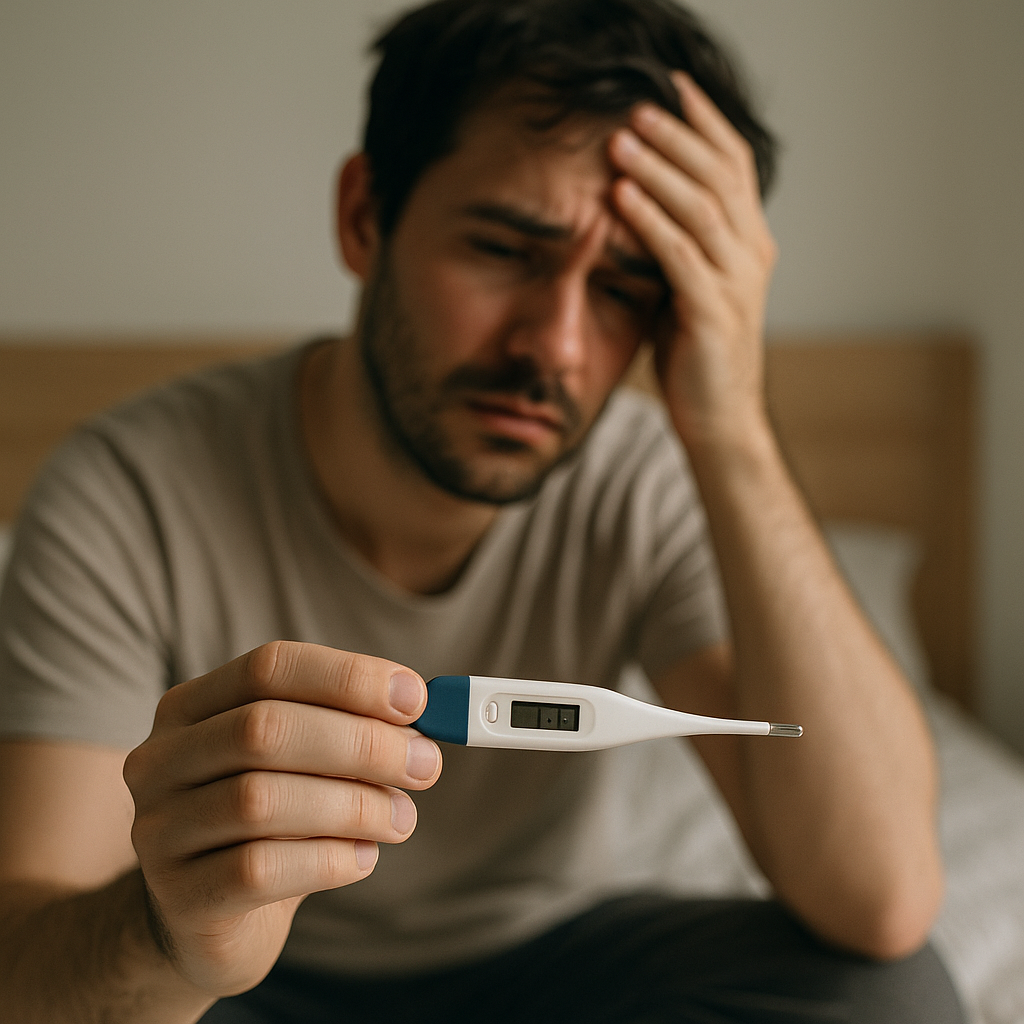
It's crucial for your health to distinguish between the fever-like feelings from sleep deprivation and an actual fever from an infection. One is a sign of exhaustion and stress, while the other signals an active fight against a pathogen. Using a reliable thermometer is the only way to know for sure.
| Symptom | Sleep Deprivation Effects | True Febrile Illness (e.g., Flu) |
|---|---|---|
| Measured Temperature | Normal or slightly elevated (e.g., below 100.4°F / 38°C) | Elevated (typically 100.4°F / 38°C or higher) |
| Onset | Gradual, after one or more nights of poor sleep. | Can be sudden or gradual over 1-2 days. |
| Primary Feeling | Fatigue, brain fog, generalized achiness, feeling "off." | Intense fatigue, pronounced body aches, headache, weakness. |
| Associated Symptoms | Irritability, difficulty concentrating, mild headache. | Cough, sore throat, runny nose, nausea, vomiting. |
| Response to Rest | Symptoms often improve significantly after a full night of restorative sleep. | Symptoms persist and evolve according to the illness, though rest is vital for recovery. |
| Chills/Sweats | May experience subjective feelings of being hot or cold due to thermodysregulation. | Distinct, often intense chills as temperature rises, and sweats as it falls ("breaking" the fever). |
This table serves as a guide, but it is not a substitute for medical advice. If you have a sustained high temperature or other concerning symptoms, consulting a healthcare professional is always the best course of action.
The final piece of this puzzle lies in how sleep deprivation directly interferes with the body's ability to regulate its own temperature. As we discussed, the circadian drop in core body temperature is a vital signal for initiating and maintaining sleep. When this process is thrown off balance, your perception of temperature can become unreliable, leading to a subjective feeling of fever even when your core temperature remains within a normal range. This is a key aspect of how sleep deprivation can cause fever-like sensations.
Thermoregulation is an energy-intensive process. Your body maintains its temperature through a balance of heat production (from metabolism and muscle activity) and heat loss (primarily through the skin). During sleep, this system shifts into a different mode, prioritizing a slight cooling of the core.
Sleep deprivation disrupts this delicate balance. The stress of being awake when you should be asleep activates the sympathetic nervous system, the "fight-or-flight" response. This can lead to physiological changes that interfere with normal heat loss, such as constricting blood vessels in the skin (vasoconstriction). At the same time, the body's metabolic rate may be altered. This mismatch between heat production and heat loss can lead to instability in your body temperature and a feeling of being uncomfortably warm or chilled (Irwin & Opp, 2017).
Think of it like a house's heating system that has lost its connection to the thermostat. It might kick on at odd times or fail to shut off when the room is warm enough, leading to uncomfortable temperature swings. Similarly, a sleep-deprived body struggles to maintain its thermal equilibrium, contributing to the physical discomfort that mimics a fever. Animal studies have shown that sleep deprivation during an infection can exacerbate the fever response, leading to a more rapid onset and a higher peak temperature, suggesting a fundamental breakdown in thermoregulatory control (Lapshina & Ekimova, 2010).
This brings us to a critical distinction: the difference between your objective core body temperature (what a thermometer measures) and your subjective perception of your body's temperature. Your skin temperature can fluctuate much more than your core temperature. When you are sleep-deprived, you might experience peripheral vasoconstriction, making your hands and feet feel cold while your face feels flushed and hot. These confusing signals can be interpreted by your brain as a sign of fever.
You might feel shivery and pile on blankets, only to feel overheated moments later. This is not the coordinated, purposeful chilling of a true fever but rather the chaotic result of a dysregulated system. The fatigue and aches from the inflammatory response combine with these confusing thermal sensations to create a very convincing illusion of a febrile illness. The answer to "can sleep deprivation cause fever?" becomes clearer: it can cause the sensation of a fever with remarkable accuracy.
Understanding the intricate links between sleep loss, inflammation, immunity, and thermoregulation is not merely an academic exercise. It is empowering. This knowledge provides a clear road map for protecting your health. If lack of sleep can so effectively mimic and invite illness, then prioritizing restorative sleep is one of the most powerful forms of preventative medicine available to us.
Improving your sleep doesn't have to be complicated. It often involves building a consistent routine and creating an environment that signals to your body that it's time to rest.
In the 21st century, we have access to incredible tools that can help us on our wellness journey. While they are not a substitute for medical advice, they can provide powerful biofeedback to help you understand your body's patterns. Advanced wearable wellness technology can track your sleep stages, nightly temperature fluctuations, resting heart rate, and HRV.
By reviewing this data, you can start to see tangible connections. You might notice that after a night where the device shows less deep sleep and a higher-than-usual body temperature, you feel more sluggish and "off" the next day. This objective feedback can be a powerful motivator to stick with your healthy sleep habits. It turns the invisible processes of inflammation and thermoregulation into visible data points, empowering you to take control of your health.
It is vital to know when your symptoms warrant professional medical attention. While feeling "feverish" from sleep loss is common, you should contact a doctor if:
Chronic sleep problems can also be a sign of an underlying sleep disorder, such as sleep apnea or insomnia. If you consistently struggle to get enough rest despite practicing good sleep hygiene, a consultation with a sleep specialist can be life-changing.
1. Can lack of sleep cause a fever in toddlers or children? While the mechanism is the same, children are more susceptible to the effects of sleep deprivation. Their immune and nervous systems are still developing. Lack of sleep can significantly weaken their immunity, making them much more vulnerable to the common childhood viruses that cause high fevers. While the sleep loss itself won't generate the fever, it dramatically increases the risk of them catching something that will.
2. How long does it take for sleep deprivation to cause fever-like symptoms? The onset can be surprisingly rapid. Many people report feeling unwell after just one night of significantly reduced or poor-quality sleep. Studies show that inflammatory markers like IL-6 can increase after a single night of partial sleep deprivation (Irwin et al., 2016). The severity of symptoms often correlates with the degree of sleep debt accumulated over time.
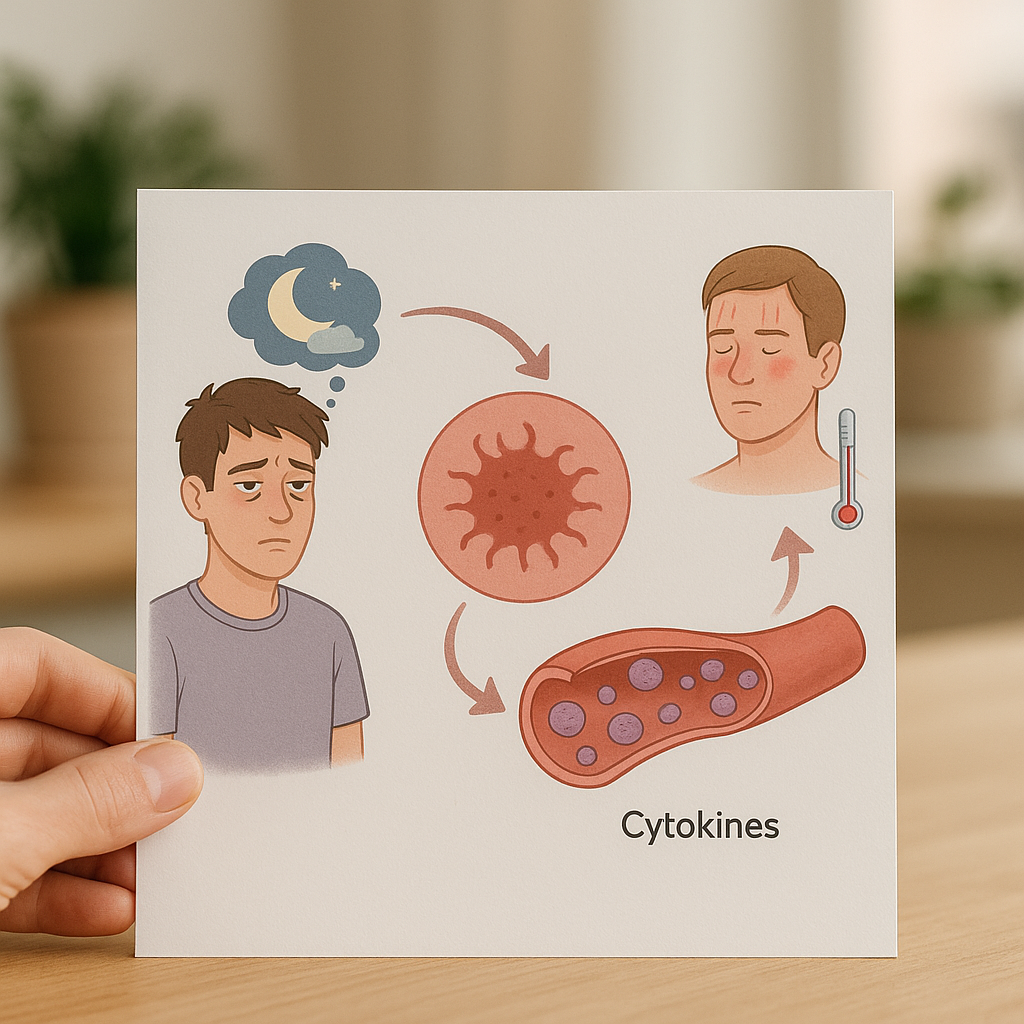
3. Does sleep deprivation cause a fever, or does it just feel like one? This is the core of the issue. Sleep deprivation causes a subjective feeling of being feverish due to inflammation and thermoregulatory dysfunction. However, it does not typically cause a true clinical fever, which is a measured core body temperature of 100.4°F (38°C) or higher. If you have a temperature that high, it is almost certainly due to an underlying infection, which sleep deprivation may have made you more susceptible to.
4. Can you have a low-grade fever from lack of sleep? It is possible for sleep deprivation to cause a very slight elevation in body temperature that might fall into the "low-grade" category (e.g., 99.5-100.3°F or 37.5-37.9°C). This is more likely a result of the body's disrupted thermoregulation rather than a true hypothalamic-driven fever. However, any persistent elevated temperature should be monitored, as it's more likely a sign of your body fighting a mild infection.
5. How can I tell the difference between being tired and feeling feverish from sleep loss? The lines can be blurry. Simple tiredness is primarily a feeling of low energy and a desire to sleep. The "feverish" feeling from sleep loss is more complex and includes physical symptoms like mild body aches, chills, a feeling of warmth in the face, and a general sense of malaise or "sickness," all driven by the inflammatory response. Using a thermometer is the best way to differentiate.
The question, "can lack of sleep cause a fever?" does not have a simple, one-word answer. A nuanced exploration of human physiology reveals a clear and compelling indirect relationship. Sleep deprivation does not, in isolation, trigger a clinical fever. That response is reserved for the body's battle against invading pathogens. However, a lack of restorative sleep initiates a cascade of events that masterfully imitates the experience of being sick.
It triggers a pro-inflammatory state, flooding the body with the very cytokines that produce feelings of malaise, aches, and chills. It compromises the immune system, leaving the gates wide open for the viruses and bacteria that cause true fevers. Finally, it disrupts the body's delicate thermoregulatory system, creating a subjective sense of being hot and cold that is easily mistaken for a fever. The sleep-deprived body is a body under stress, sounding an alarm and lowering its defenses simultaneously. Recognizing this profound connection empowers us to view sleep not as a luxury, but as a foundational pillar of our health, as vital as nutrition and exercise for maintaining a resilient and well-regulated system.
Cohen, S., Doyle, W. J., Alper, C. M., Janicki-Deverts, D., & Turner, R. B. (2009). Sleep habits and susceptibility to the common cold. Archives of Internal Medicine, 169(1), 62–67. https://doi.org/10.1001/archinternmed.2008.505
Feuth, T. (2024). Interactions between sleep, inflammation, immunity and infections: A narrative review. Immunity, Inflammation and Disease, 12(10), e70046. https://doi.org/10.1002/iid3.70046
Frey, D. J., Fleshner, M., & Wright, K. P., Jr. (2007). The effects of 40 hours of total sleep deprivation on inflammatory markers in healthy young adults. Brain, Behavior, and Immunity, 21(8), 1050–1057.
Imeri, L., & Opp, M. R. (2009). How (and why) the immune system makes us sleep. Nature Reviews Neuroscience, 10(3), 199–210. https://doi.org/10.1038/nrn2576
Irwin, M. R. (2015). Why sleep is important for health: a psychoneuroimmunology perspective. Annual Review of Psychology, 66, 143–172.
Irwin, M. R., & Opp, M. R. (2017). Sleep Health: Reciprocal Regulation of Sleep and Innate Immunity. Neuropsychopharmacology, 42(1), 129–155.
Irwin, M. R., Olmstead, R., & Carroll, J. E. (2016). Sleep disturbance, sleep duration, and inflammation: A systematic review and meta-analysis of cohort studies and experimental sleep deprivation. Biological Psychiatry, 80(1), 40–52.
Krueger, J. M., Walter, J., Dinarello, C. A., Wolff, S. M., & Chedid, L. (1984). Sleep-promoting effects of endogenous pyrogen (interleukin-1). American Journal of Physiology-Regulatory, Integrative and Comparative Physiology, 246(6), R994–R999. https://doi.org/10.1152/ajpregu.1984.246.6.R994
Lapshina, K. V., & Ekimova, I. V. (2010). Effects of Sleep Deprivation on Measures of the Febrile Reaction and the Recovery of Somatovisceral Functions and Sleep in Endotoxemia. Neuroscience and Behavioral Physiology, 40, 381–388. https://doi.org/10.1007/s11055-010-9268-6
Meier-Ewert, H. K., Ridker, P. M., Rifai, N., Regan, M. M., Price, N. J., Dinges, D. F., & Mullington, J. M. (2004). Effect of sleep loss on C-reactive protein, an inflammatory marker of cardiovascular risk. Journal of the American College of Cardiology, 43(4), 678–683.

