

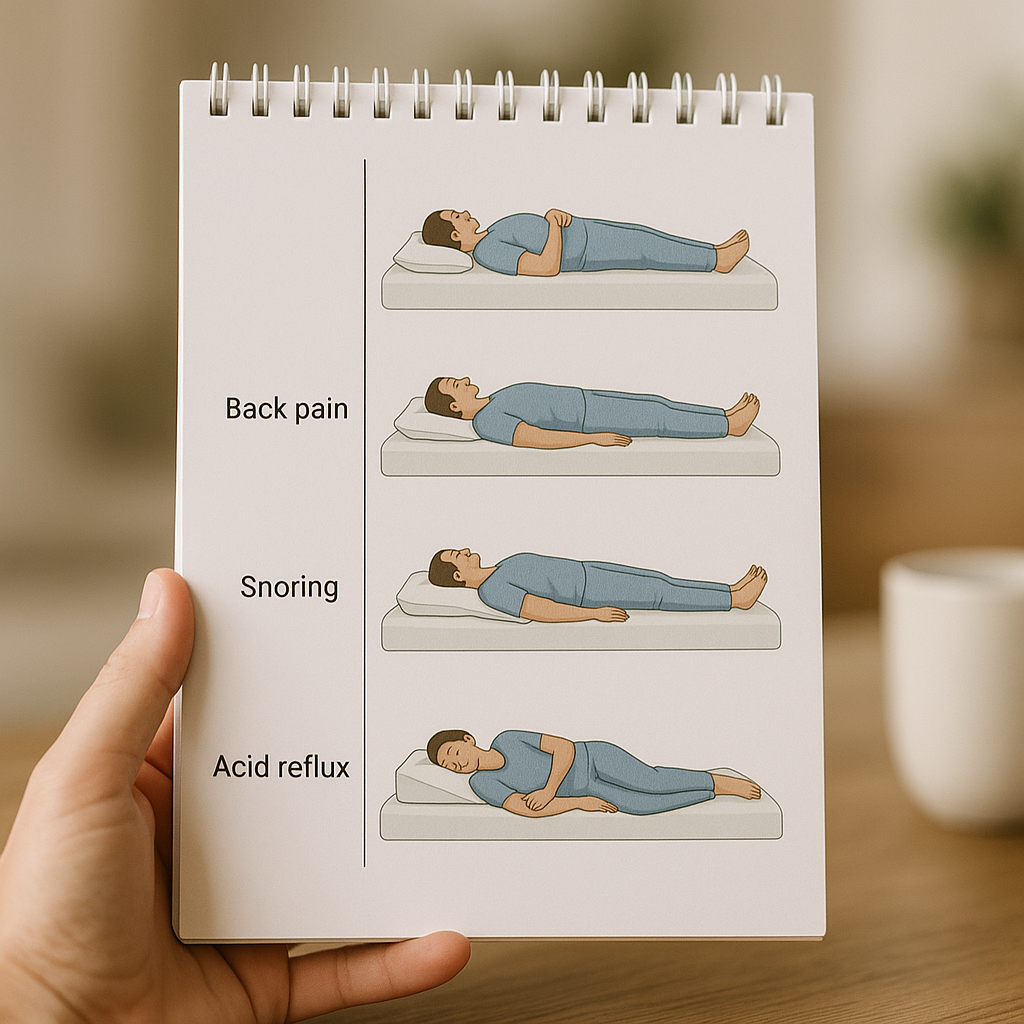
An individual's sleeping position significantly influences nocturnal physiological processes, overall sleep quality, and musculoskeletal health. This document provides a comprehensive examination of the primary sleep postures—side, back, and stomach—analyzing their biomechanical implications and effects on various health conditions. Research indicates that side sleeping is the most prevalent posture and is often recommended for conditions such as obstructive sleep apnea, acid reflux, and pregnancy. Back sleeping offers benefits for spinal alignment but may exacerbate snoring and sleep apnea. Stomach sleeping is generally discouraged due to the significant strain it places on the neck and spine. The analysis extends to the role of pillows and mattresses in optimizing posture and provides a detailed sleep positions chart to guide individuals in selecting a posture that alleviates common ailments like back pain, neck strain, and joint discomfort. The objective is to equip readers with evidence-based knowledge to make informed decisions about their sleep habits for improved health and well-being.
Have you ever woken up feeling as though you've run a marathon in your sleep, with a stiff neck or an aching back that wasn't there when you went to bed? We often blame a bad mattress or a stressful day, but the silent culprit is frequently our sleeping position. For roughly one-third of our lives, we are unconscious, and the posture our body holds during these crucial hours has a profound impact on how we feel when we awaken. It's not merely a matter of comfort; it's a matter of health. The way you arrange your limbs and torso can influence everything from breathing patterns and spinal alignment to circulation and even the formation of facial wrinkles (Salas, 2025).
Think of your spine as a central support column. During the day, it works against gravity to keep you upright. At night, it needs a chance to decompress and recover. An unsupportive sleeping position can twist or strain this column, preventing muscles from fully relaxing and leading to morning pain and stiffness. It's a subtle but persistent stressor. Over years, a poor sleep posture can contribute to chronic pain, nerve compression, and other musculoskeletal issues.
Conversely, adopting a posture that supports the natural curvature of your spine can be restorative. It allows your muscles to relax, relieves pressure on your joints, and promotes better circulation. For individuals with specific health concerns, the right position can be therapeutic. It might mean the difference between a night of interrupted breathing from sleep apnea and a night of clear, easy breaths. It can prevent the painful sensation of heartburn for someone with GERD or ensure optimal blood flow for an expecting mother. Understanding the biomechanics of each position is the first step toward transforming your sleep from a passive activity into an active process of healing and restoration.
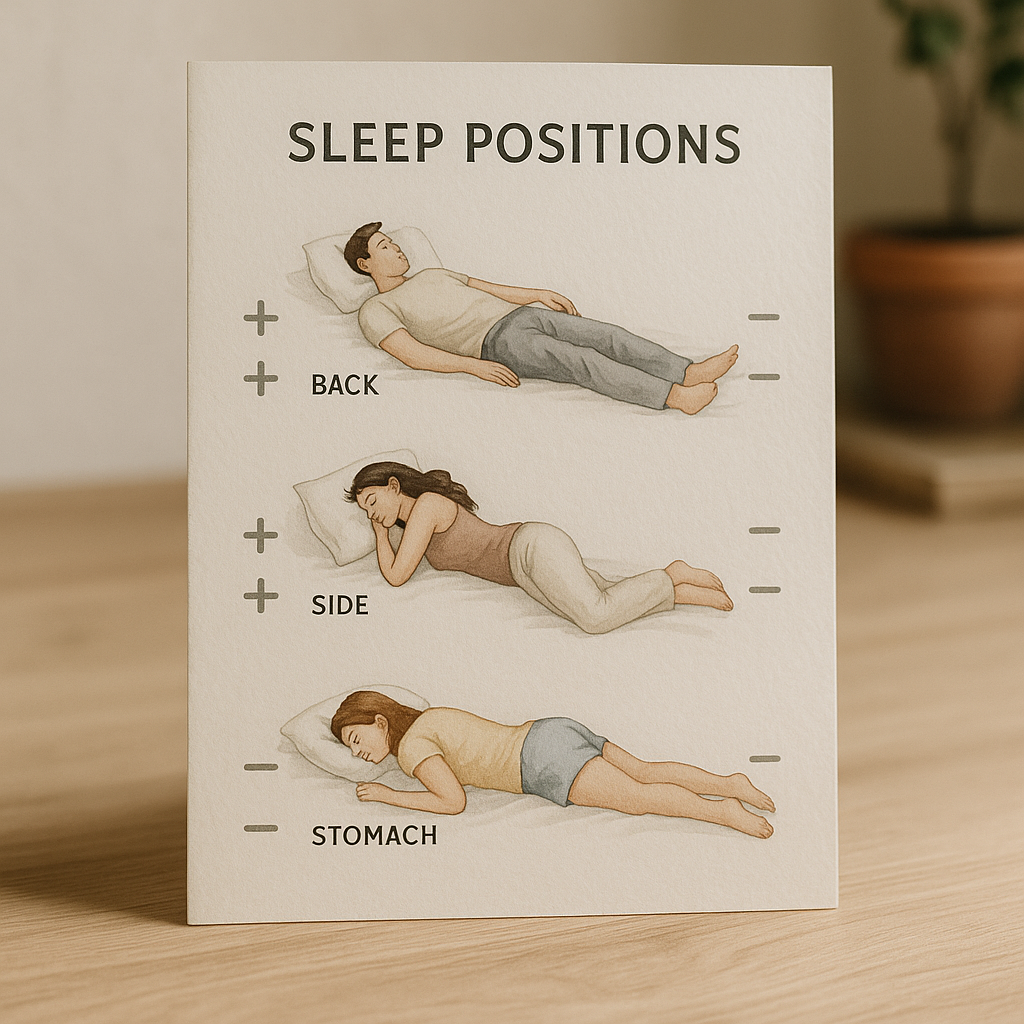
Navigating the world of sleep postures can feel complex, but it largely boils down to three main categories: side, back, and stomach. Each has a distinct profile of benefits and drawbacks. The ideal choice is deeply personal, depending on your unique body, health conditions, and comfort preferences. Below is a table to help you visualize the trade-offs.
| Position | Primary Benefits | Potential Drawbacks | Best For |
|---|---|---|---|
| Side Sleeping | Promotes healthy spinal alignment, reduces snoring and sleep apnea, beneficial for acid reflux (left side), and recommended during pregnancy. | Can cause shoulder and hip pain, may contribute to facial wrinkles. | People with sleep apnea, snoring, acid reflux, back pain, and those who are pregnant. |
| Back Sleeping | Maintains neutral spinal alignment, evenly distributes body weight, may prevent facial wrinkles. | Worsens snoring and sleep apnea, can exacerbate lower back pain without proper support, not recommended in late pregnancy. | People with neck pain, those concerned about wrinkles, and some individuals with back pain (with knee support). |
| Stomach Sleeping | May reduce snoring. | Puts significant strain on the neck and spine, forces head to be turned, can cause back and neck pain. | Generally not recommended, but may offer some relief for snorers who cannot sleep in other positions. |
Side sleeping is the most common posture by a significant margin, with over 60% of adults favoring this position (Sleep Foundation, n.d.-a). As we age, our spinal flexibility decreases, which may be one reason why curling up on our side feels more natural and comfortable. If you are a side sleeper, you are in good company, and for many, this is the healthiest way to rest.
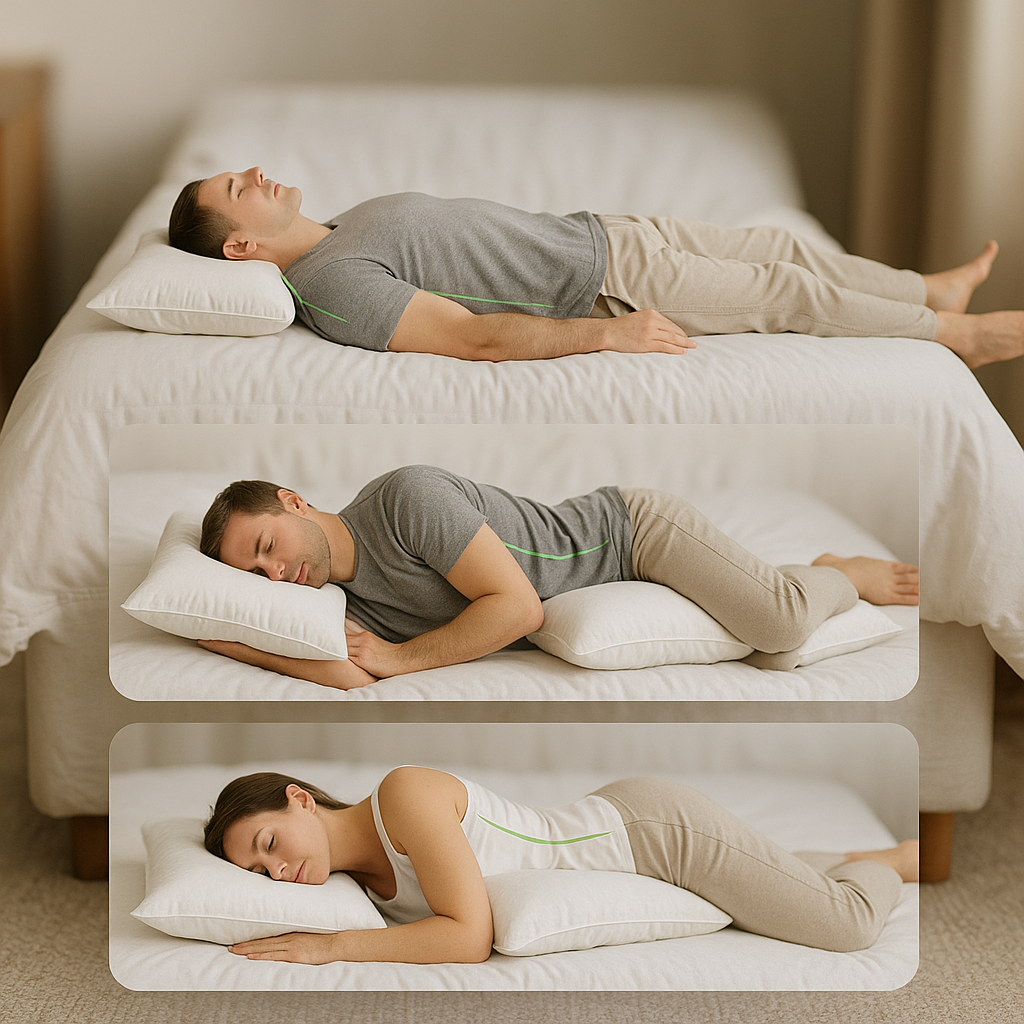
When you lie on your side, the primary goal is to maintain a straight, neutral spine from your head down to your hips. Imagine a straight line running through the center of your body. Your pillow and mattress should work together to support this line. A pillow that is too high will bend your neck upwards, while one that is too low will let it droop. Both scenarios create strain on your neck muscles and cervical spine. The ideal pillow for a side sleeper fills the space between the ear and the outside of the shoulder.
Similarly, your hips and shoulders are the widest points of your body and bear the most pressure in this position. A mattress that is too firm will create pressure points on these joints, while one that is too soft will allow your torso to sag, throwing your spine out of alignment. The best mattress for a side sleeper often has a medium-firm feel with enough give to cushion the shoulders and hips.
Many side sleepers find that placing a thin pillow between their knees provides a remarkable amount of relief. This simple addition prevents the top leg from sliding forward and twisting the pelvis and lower back. It helps keep the hips, pelvis, and spine in better alignment, reducing stress on the lumbar region and hip joints (Sleep Foundation, 2024).
For most healthy individuals, the choice between the left and right side is a matter of personal comfort. However, for certain conditions, the distinction is meaningful.
Sleeping on the back, also known as the supine position, is the second most popular choice. For some, it is the key to waking up pain-free, while for others, it is a recipe for a night of snoring and discomfort. The secret to successful back sleeping lies in understanding its mechanics and using strategic support.
The primary benefit of back sleeping is the potential for excellent spinal alignment. When you lie on your back on a supportive surface, it is easier to keep your head, neck, and spine in a neutral position. This evenly distributes your body weight, preventing localized pressure that can lead to aches and pains. For individuals suffering from certain types of neck or hip pain, this can be the most comfortable and therapeutic posture (Harvard Health Publishing, 2025).
Another oft-cited benefit is cosmetic. Because your face is not pressed against a pillow, back sleeping can help prevent "sleep wrinkles" that are caused by the compression and creasing of the skin over many hours. It also allows skincare products to remain on your face rather than being absorbed by your pillowcase.
Despite its benefits, back sleeping is not without significant drawbacks.
To make back sleeping work for you, focus on support. Your pillow should be of a low to medium loft, designed to support the natural curve of your neck without pushing your head too far forward. Some people prefer cervical pillows with a built-in neck roll and a depression for the head. Your arms should be kept in a symmetrical position, either at your sides or resting on your torso, to avoid creating asymmetrical strain on your neck and shoulders.
If snoring or acid reflux is a concern, consider elevating the head of your bed by about six inches using blocks or a wedge pillow that fits under the mattress. This incline uses gravity to help keep your airways open and prevent stomach acid from rising.
Sleeping on the stomach, or in the prone position, is the least common of the three main postures, with less than 10% of adults preferring it. While some find it comfortable, it is widely regarded by sleep experts and healthcare professionals as the most problematic position for musculoskeletal health.
The primary issue with stomach sleeping is the immense strain it places on your spine and neck.
The one potential benefit of stomach sleeping is that it can sometimes reduce snoring. In this position, gravity may pull the tongue and soft tissues forward, away from the back of the throat, helping to keep the airway open. However, given the significant drawbacks for spinal health, most experts agree that side sleeping is a much better alternative for managing snoring and sleep apnea.
Changing a lifelong sleep habit is difficult. If you find it impossible to sleep in any other position, there are ways to mitigate the risks associated with stomach sleeping.
Even with these modifications, stomach sleeping remains a high-risk posture. If you suffer from neck or back pain, making a concerted effort to transition to side or back sleeping is one of the most beneficial changes you can make for your long-term health.
Understanding the theory is one thing; applying it is another. The goal is to match your sleeping position to your specific health needs. Think of this section as your practical, data-backed sleep positions chart for addressing some of the most common sleep-related complaints.
Pain is your body's signal that something is wrong, and morning aches are often a direct result of poor nocturnal posture.
These breathing-related sleep disorders are heavily influenced by posture.
The burning sensation of heartburn can ruin a night's sleep. Your posture can either fan the flames or help extinguish them.
As the body changes during pregnancy, finding a comfortable and safe sleeping position becomes a priority.
For those with arthritis, bursitis, or other joint issues, pressure is the enemy.
You can perfect your sleeping position, but without the right support system, your efforts may be in vain. Your mattress and pillow are not just accessories; they are essential tools for maintaining proper alignment throughout the night. A mismatched set can undermine the benefits of even the best sleep posture.
The purpose of a pillow is to support your head and neck in a neutral position, aligning them with the rest of your spine. The ideal pillow is entirely dependent on your primary sleeping position. The table below provides a clear guide.
| Sleeping Position | Ideal Pillow Loft (Thickness) | Pillow Characteristics |
|---|---|---|
| Back Sleeper | Low to Medium | Should support the natural curve of the neck without pushing the head too far forward. A pillow with a central divot or a built-in cervical roll can be effective. |
| Side Sleeper | Medium to High | Must be thick and firm enough to fill the entire space between your ear and the mattress, keeping the head and neck aligned with the spine. |
| Stomach Sleeper | Very Low (Thin) or None | A thick pillow will force the neck into a severe upward angle. A very thin pillow or sleeping directly on the mattress is best to minimize neck strain. |
Pillow material—memory foam, latex, down, or polyester fill—is largely a matter of personal preference for comfort and temperature regulation. However, materials like memory foam and latex often provide more consistent support throughout the night compared to softer fills that can compress and flatten.
A mattress has one job: to support your body in a neutral alignment while relieving pressure points. The "best" mattress is subjective and depends on your body weight, sleep position, and personal comfort preference.
A mattress is a significant investment in your health. Take your time when choosing one. Many companies now offer extended in-home trial periods, which are invaluable for determining if a mattress truly works for your body and sleep style over time.
Knowing your ideal sleeping position is one thing; training your body to adopt it is another. If you have been a stomach sleeper your whole life, trying to switch to side sleeping can feel unnatural and frustrating. The transition requires patience, persistence, and a few clever tricks.
This is one of the most effective strategies. If you want to switch from back sleeping to side sleeping, for example, you can place a large, firm body pillow behind your back. When you instinctively try to roll onto your back during the night, the pillow will act as a physical barrier, gently nudging you back onto your side. Similarly, if you are trying to avoid stomach sleeping, you can place pillows on either side of your body to make rolling over more difficult. Some people even find success by sewing a tennis ball onto the front of an old t-shirt to make rolling onto their stomach uncomfortable.
For those dealing with positional sleep apnea, more advanced tools are available. These are typically wearable devices, worn around the chest or neck, that vibrate gently whenever you roll onto your back. This subtle feedback is usually enough to prompt you to change position without fully waking you up. Over time, this can help condition your body to prefer side sleeping.
Your brain and body seek comfort. To make a new position stick, you need to make it as comfortable as possible. Invest in the right pillow for your new target position. If you are moving to side sleeping, get a good pillow for between your knees. If you are transitioning to back sleeping, get a supportive wedge or pillow for under your knees. By optimizing the comfort of the new position, you make it more likely that your body will choose to stay there.
The transition won't happen overnight. It can take several weeks of consistent effort. Be patient with yourself. Even if you wake up in your old position, simply roll back into the new one and try again.
How do you know if your efforts to change your sleep position are actually working? You might feel less pain in the morning, which is a great sign. But to truly understand the impact on your sleep quality, modern technology offers incredible insights. This is where devices like the Mayissi smart ring become invaluable partners in your health journey.
Older methods of sleep tracking were cumbersome, often requiring you to be in a lab. Today, sophisticated sensors are packed into sleek, comfortable wearables. A wearable sleep tracker can monitor your body's signals throughout the night with remarkable accuracy. It can tell you not just how long you slept, but can break down your night into sleep stages (light, deep, REM), measure your heart rate variability (a key indicator of recovery), track your respiratory rate, and even detect tossing and turning.
When you are trying to change your sleeping position, this data becomes a powerful feedback loop. You can correlate your efforts with objective outcomes. For example, you might notice that on nights you successfully sleep on your side, your respiratory rate is more stable, you experience fewer awakenings, and you spend more time in restorative deep sleep. This data provides concrete evidence that your new posture is improving your physiological health, which can be a powerful motivator to stick with the change.
By comparing your sleep data night after night, you can run your own personal experiments. Does a new pillow improve your deep sleep percentage? Does sleeping on your left side reduce your heart rate? A smart ring transforms you from a passive sleeper into an active participant in optimizing your rest, providing the data you need to fine-tune your sleep environment and habits for the best possible outcomes.
What is the healthiest sleeping position?
For most people, side sleeping is considered the healthiest position. It supports spinal alignment, keeps airways open (reducing snoring and sleep apnea), and is particularly beneficial for those with acid reflux (left side) and for pregnant individuals. However, the "best" position is ultimately the one that allows you to sleep comfortably and wake up pain-free while addressing your specific health needs.
Is it bad to sleep on your stomach?
Generally, yes. Stomach sleeping is widely discouraged by healthcare professionals because it forces your neck into a twisted position for hours and can cause your spine to arch unnaturally. This can lead to chronic neck and back pain. While it may reduce snoring for some, the risks to your musculoskeletal health usually outweigh this benefit.
How can I stop sleeping on my back to reduce snoring?
The most effective method is positional therapy. Try placing a firm pillow or body pillow behind you to act as a barrier, making it difficult to roll onto your back. You can also try wearable devices that vibrate when you roll onto your back, gently prompting you to switch positions without fully waking you.
I wake up with shoulder pain. What is the best position for me?
If you have shoulder pain, it is best to avoid sleeping on the affected side. Sleeping on your back is often a good alternative as it takes pressure off the shoulder joint. If you prefer to sleep on your other side, hugging a large pillow can help to stabilize your shoulder and prevent it from collapsing forward.
Does my pillow really make a difference?
Absolutely. Your pillow's job is to keep your head and neck aligned with your spine. A pillow that is too high or too low for your preferred sleeping position will create strain. Side sleepers need a thicker, firmer pillow, while back sleepers need a thinner one. The right pillow is a critical component of healthy sleep posture.
Is there a connection between sleeping position and personality?
Some pop psychology theories have tried to link sleep positions to personality traits (e.g., fetal position sleepers are sensitive, soldier position sleepers are reserved). However, there is very little rigorous scientific evidence to support these claims (Sleep Foundation, n.d.-b). It is more likely that people adopt positions based on physical comfort, age, body type, and underlying health conditions rather than their personality.
How long does it take to change your sleeping position?
It varies for each individual, but it typically takes several weeks of consistent effort to form a new habit. Using aids like pillows to make the new position more comfortable and to block your old position can speed up the process. Be patient and persistent.
Your journey through the night is as important as your journey through the day. The posture you hold for those seven or eight hours is not a trivial matter of habit; it is a fundamental pillar of your health. It influences your pain levels, your breathing, your digestion, and your ability to wake up feeling truly restored. By understanding the principles laid out in this sleep positions chart and by taking deliberate steps to align your posture with your body's needs, you are not just aiming for a better night's sleep. You are investing in a future with more energy, less pain, and a greater sense of well-being. Your body is an intricate, intelligent system. Listen to its signals, give it the support it requires, and it will reward you with the profound gift of restorative rest.
Cleveland Clinic. (2025, January 7). What’s the best sleep position for you?https://health.clevelandclinic.org/best-sleeping-position
Harvard Health Publishing. (2025, November 1). Is your sleep position helping or hurting you?https://www.health.harvard.edu/staying-healthy/is-your-sleep-position-helping-or-hurting-you
Johns Hopkins Medicine. (2025, October 6). Choosing the best sleep position. https://www.hopkinsmedicine.org/health/wellness-and-prevention/choosing-the-best-sleep-position
Khan, B. A., Sodhi, J. S., Zargar, S. A., Javid, G., Yattoo, G. N., Shah, A., Gulzar, G. M., & Khan, M. A. (2012). Effect of bed head elevation during sleep in symptomatic patients of nocturnal gastroesophageal reflux. Journal of Gastroenterology and Hepatology, 27(6), 1078–1082. https://doi.org/10.1111/j.1440-1746.2011.07009.x
Skarpsno, E. S., Mork, P. J., Nilsen, T. I. L., & Holtermann, A. (2017). Sleep positions and nocturnal body movements based on free-living accelerometer recordings: Association with demographics, lifestyle, and insomnia symptoms. Nature and Science of Sleep, 9, 267–275. https://doi.org/10.2147/NSS.S145777
Sleep Foundation. (2024, May 22). What is the best sleeping position?https://www.sleepfoundation.org/sleeping-positions
Sleep Foundation. (n.d.-a). Side sleeping. Retrieved March 26, 2026, from https://www.sleepfoundation.org/sleeping-positions/side-sleeping
Sleep Foundation. (n.d.-b). What your sleeping position says about you. Retrieved March 26, 2026, from https://www.sleepfoundation.org/sleeping-positions/meaning
WebMD. (2025, May 12). How your sleep position affects your sleep quality. https://www.webmd.com/sleep-disorders/best-sleep-positions

